Built Environment Education TALK at the 19th International Architecture Exhibition of Venice
By Krisztina Somogyi PhD, Member of the UIA Architecture and Children Work Programme
Scenarios about the future are a central issue in architectural discourse today, especially in relation to the ecological and social crises. They are also a defining theme of exhibitions such as the International Architecture Exhibition of Venice. The concept of the 19th Biennale Architettura was formulated by chief curator Carlo Ratti under the title Intelligens. Natural. Artificial. Collective. Intelligens refers—through its spelling—to the need for communication with gens, meaning “people” in Latin, about “how we can adapt to the world of tomorrow with confidence and optimism.” Reflecting on the ecological disasters of the present, the chief curator emphasised that architecture has always been a “response to a hostile climate driven by optimism.”
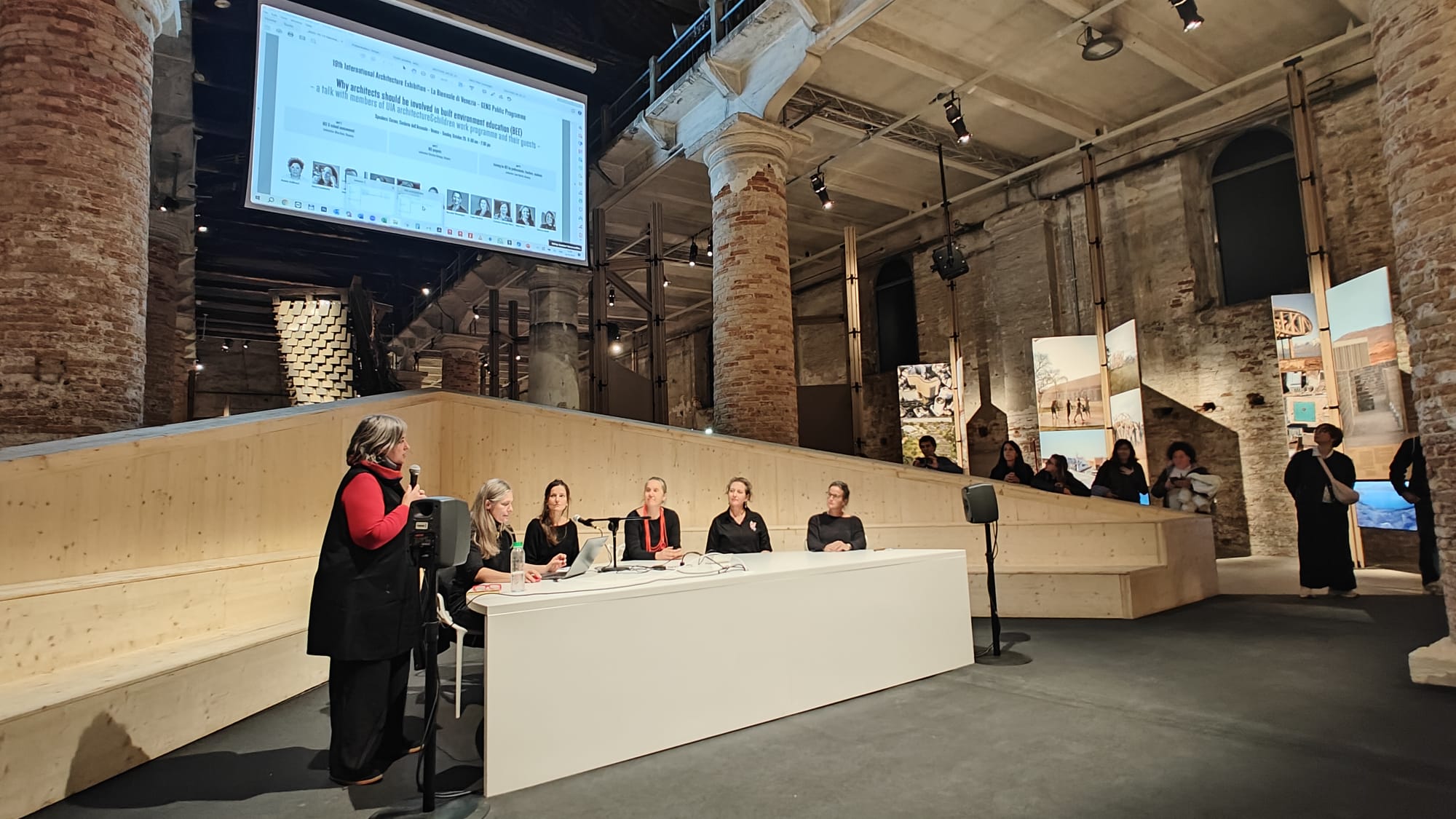
According to built environment education (BEE) experts, this adaptation must begin with preparing children to better understand the realities of the present. The UIA Architecture & Children Work Program, founded in 1999 with the support of UIA President Vassilis Sgoutas—whose passing was announced as this article was being written—has been a highly active group gathering best practices in BEE worldwide. It has developed the theoretical framework of the field and organises webinars, awards, and talks throughout the year. The BEE thematic day at the imposing Speakers’ Corner installation in the heart of the Arsenale took place on 26 October 2025. The short lectures presented by members highlighted the importance of considering children as active partners in the dialogue about the environment and the need to empower them to become responsible and agile citizens of our globe.
Children as Future Architects, Policymakers and Users
Architecture is inherently connected to the future—not only because design is a projection of it, but also because the spatial formations of the present determine the socio-physical environment into which future generations are born and what takes place in their socialisation. The desire to shape the near future is a fundamental approach for architects and educators involved in BEE, who regard children as individuals whose knowledge, intentions, abilities, and environmental attitudes will soon influence the direction of global development.
BEE professionals argue that children need experience-based knowledge and skills to better understand, use, and shape the environments they inhabit. The aim is to help them grasp the memories, stories, and identities embedded in local heritage, as well as the values of contemporary architecture. This requires introducing them to the logics that shape architecture—relationships between material, technology, structure, and form—while offering the joy of creative processes and project-based learning, enhancing critical thinking, and discussing the possibilities, consequences, and responsibilities of shaping the environment.
Architects must be prepared for this dialogue with children. This shift in attitude requires transforming architectural policies, practices, and education, supported by targeted workshops based on specific pedagogical methodologies. At the Arsenale—surrounded by vibrant architectural visions, inspiring material, structural and spatial experiments, and AI-supported future scenarios—the BEE talks presented an alternative idea: that the feasibility of a more humane and sustainable future lies not primarily in object or spatial experimentation, but in changing human attitudes.
Back to Schools – Education About the Environment
As stated in the Charter¹ of BEE created by the UIA Architecture & Children WP in 2019: “The built environment provides the framework for all human activity. We give it form and it forms us. It affects the mind, spirit, body; the way we move from place to place and the people we meet. Through symbolic, significant, public and private structures and spaces it represents the values of a community in a concrete form.” Environmental psychologists Proshansky, Ittelson and Rivlin similarly highlighted the complex ways in which the environment shapes human life in their 1970s book Man and His Physical Setting. The program at the Arsenale began with a thematic block on school environments, arguing that schools are not only important locations but also areas of intervention and tools for built environment education. Schools are often described as “second homes” for children, accompanying their socialization process.
Examples of BEE related to schools typically involved participatory spatial design, such as the greening of a schoolyard presented by Samia Gallouzi and Imen Landoulsi. Their project, created with students from a rural school in Tunisia, used visual tools to help children formulate their visions. These suggestions were then interpreted and transformed into plans by architecture students from the National School of Architecture and Urban Planning of Carthage University. The experience demonstrated that using vision boards, in the form of drawings and collages, is a much more effective way of encouraging young children to talk about the built environment than relying on verbal expression.
Vera Marin, an educator and urban planner from Romania, also emphasised the importance of participatory spatial design through the My school can be cool program, continuously organised by De-a Arhitectura for ten years. Pupils engage in a one school year long design-thinking process which begins with an analytical phase called participatory diagnosis. This first stage enables students to move from personal experience to analytical understanding, learning to observe, interpret, and articulate their school environment using a shared framework of analytical criteria (venustas, utilitas, firmitas, ecology). The second phase is centred on a single intervention jointly selected to reflect shared interests and to benefit the school community and the last phase consists of implementing this intervention during the summer break, allowing students to complete the full cycle from analysis to action.
Hungarian architect András Cseh and the CAN Architects practice focus on redesigning historical school buildings and designing new ones. In line with contemporary educational methodologies and children’s evolving learning processes, they experiment with transforming school spaces in collaboration with teachers, students, environmental psychologists, lighting designers, acoustic engineers, and other professionals. Instead of “classrooms,” they speak of an “educational landscape,” striving to create spatial learning environments that support a wide range of activities—from individual learning to community development.
Krisztina Somogyi, architectural critic and environmental psychologist, highlighted that guided observation of students’ own school buildings offers the best opportunity to discuss personal environmental experiences and decode complex spatial meanings. Her research uses participatory photography to enable high school students to articulate nuanced spatial problems, missed opportunities, and abstract meanings associated with both the school building and school life. By slowing down perception, reconnecting with the physicality of the environment becomes a rich experience—especially in an age of digital overstimulation. As a closing note to the first thematic section of the BEE talks, Somogyi cited the second consideration of the BEE Charter: “Home, school, neighbourhood, and community send children a message about their place in the world and help shape their identity. For better or worse, the environment provides the context that affects the physical and psychological quality of their lives and supports their growth into future roles as citizens.”
¹ The Charter is translated into 17 languages and can be found on the website of the WP https://www.architectureandchildren-uia.com The text of the Charter is under revision to react to changes in society and to better fit contemporary reading habits. See here.
BEE Projects from Around the World
Visitors to the BEE talks at the Biennale were mostly exhibition-goers who encountered the topic while walking through the Arsenale and stopped, captivated by the short and vivid presentations. Best practices from around the world were selected to demonstrate the diversity of BEE.
Spanish architects Pablo Amor and Christina Llorente transformed a barren schoolyard in Mallorca into an exciting playground and learning environment based on children’s visions.
Bulgarian architect Magdalina Rajeva presented guided city walks that explore architectural features while revealing hidden stories through games. Exercise books designed for the walks support children’s independent exploration, and special methods—such as “architectural gymnastics,” a movement-based interpretation of structural forces—turn abstract architectural concepts into personal experiences.
Australian architect Suzanne Bosanquet showcased ten exemplary projects generated within Australia over the last decade, that were diverse in delivery, scale and impact, with the majority being executed within the public realm, and not within the school education system or environment. These projects were all community capacity building projects, cultivating active citizenship, educating and empowering children, families and citizens, providing them with tools to address complex issues such as housing affordability, climate change, community resilience, equity, and embrace indigenous Aboriginal identity and culture.
Luise Nerlich from Weimar, Germany, presented her project linked to the German Pavilion exhibition at the Giardini, which introduced children to the climate crisis—particularly the phenomenon of urban heat islands. Through the UIA network, children from around the world sent postcards depicting trees accompanied by personal stories.
BEE Training for Architectural Students and Professionals
The third section addressed the growing need to equip architectural students and practicing professionals with the competencies required to engage in Built Environment Education. As schools increasingly become spaces where social, environmental, and spatial challenges intersect, architects and urban designers are called to act not only as technical experts, but as educators, facilitators, and mediators capable of translating disciplinary knowledge into meaningful learning processes for diverse audiences.
Vera Marin has been developing, for over two decades, initiatives that actively engage built environment professionals in society through education and participatory practice. She highlighted the strong structural fit between architectural and urban design education in higher education and built environment education in pre-university settings. The Urban Up! programme, implemented in partnership between De-a Arhitectura Association and faculties of architecture and urbanism—with participants from geography, pedagogy, and political and administrative sciences faculties—demonstrated that pairing higher-education students as mentors with pre-university pupils generates mutual benefits. Students, pupils, and teachers from both educational levels collaborate on contemporary pedagogical methodologies while co-developing integrated content aligned with the requirements of sustainable development education in line with UNESCO’s Education for Sustainable Development guidelines.
Roberta Ghelli from Grenoble, architect, researcher and director of the Maison de l’architecture de l’Isère (Grenoble, France), presented the French BEE system and two professional training programs for practicing architects and urban planners. France is a leader in this field, with an extensive institutional structure and official recognition by the French Chamber of Architects. Despite this, surveys show that only 2% of children in the country receive professional built environment education—a striking figure. The Transmettre l’architecture® professional training program, led by Grenoble School of architecture, aims to significantly increase the number of architects prepared to engage in dialogue with children about the built environment, both pedagogically and architecturally. Since 2007, around 400 architects have been trained, complemented by other programs for Maisons de l’architecture staff.
Learning Environment Education (LEE)—a term introduced by András Cseh—emphasised the multidisciplinary nature of the field, combining pedagogy, architecture, and environmental psychology, and linking architectural practice with public education and university training.
The Importance of BEE in a Time of Polycrisis
The talks of the UIA Architecture and Children WP program concluded with a presentation by co-director Mina Sava, who emphasised the importance of the UIA Charter of Built Environment Education for Children and Young People and reminded the audience that architects can be socially engaged through BEE. In her experience, working with children is not only meaningful for children and young people but also for architects, who often say that they are their best clients. She stressed that children are citizens of this planet and must be included in discussions about its future. Tragically, in 2025, many children around the world live in vulnerable conditions, affected by ecological or social crises, as reported by WP members globally. Children are victims of ongoing wars, many forced to leave their homes and grow up in temporary environments marked by fear and deprivation. Hunger, disease, and hardship affect millions of children not only in poorer regions but also in some of the wealthiest parts of the world. Anxiety about the future is rising among young people, who often feel powerless.
While the architectural visions at the Arsenale offered a wealth of exciting ideas, it was the UIA Architecture and Children Work Program that underscored a crucial point: discourse about the future is meaningless without children. The presented best practices not only showcased inspiring examples but, more importantly, called for a change in attitude. They advocated for an architectural approach that encourages active dialogue with all users—including children and people in difficult situations—because creating a sustainable and humane environment is a global public responsibility.
We thank the team of the GENS program of the Biennale di Venezia 2025 for giving us the opportunity to speak there in the beautiful auditorium of the Arsenale exhibition. We truly hope this space and program will continue in future Biennale editions — they bring such an important human touch to the exhibition.
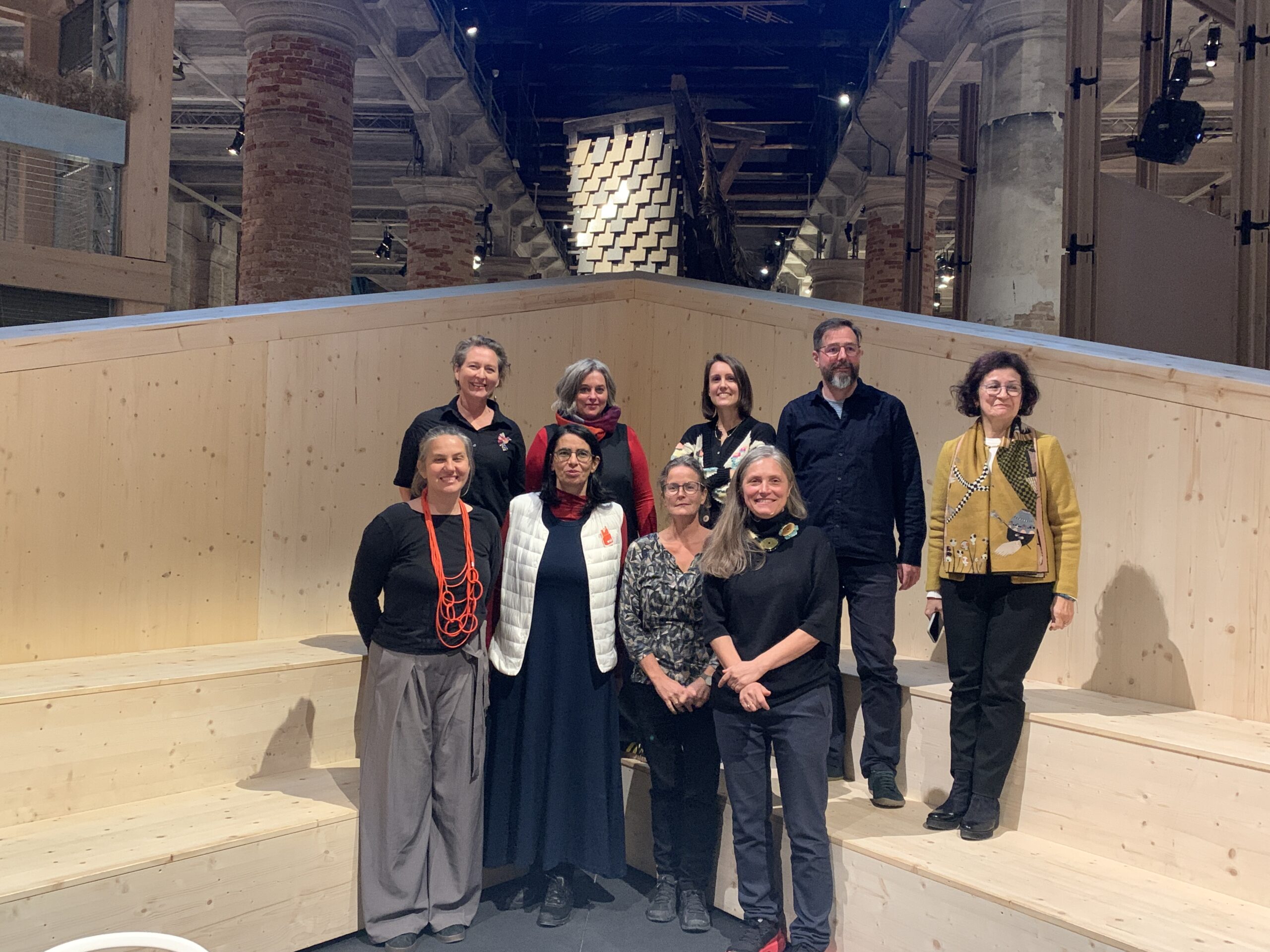
A big thank to our speakers for an unforgettable 3-hour BEE (Built Environment Education) marathon:
Samia Gallouzi & Imen Landoulsi  , Krisztina Somogyi
  , Cristina Llorente
  , Suzanne Bosanquet
  , Magdalina Rajeva
  , Luise Nerlich
  , Roberta Ghelli
  and Mina Sava
  — all part of UIA WP Architecture & Children. And special thanks to our BEE experts Vera Marin and Andras Cseh
These conversations show just how strong and connected our global community is when we work together to inspire children and young people to understand and shape their built environment.
#BiennaleArchitettura2025 #IntelliGens #GENS #BuiltEnvironmentEducation #UIAArchitecture&ChildrenWP #UIA