By Elisabete França, Co-director of UIA Informal Settlements Work Programme
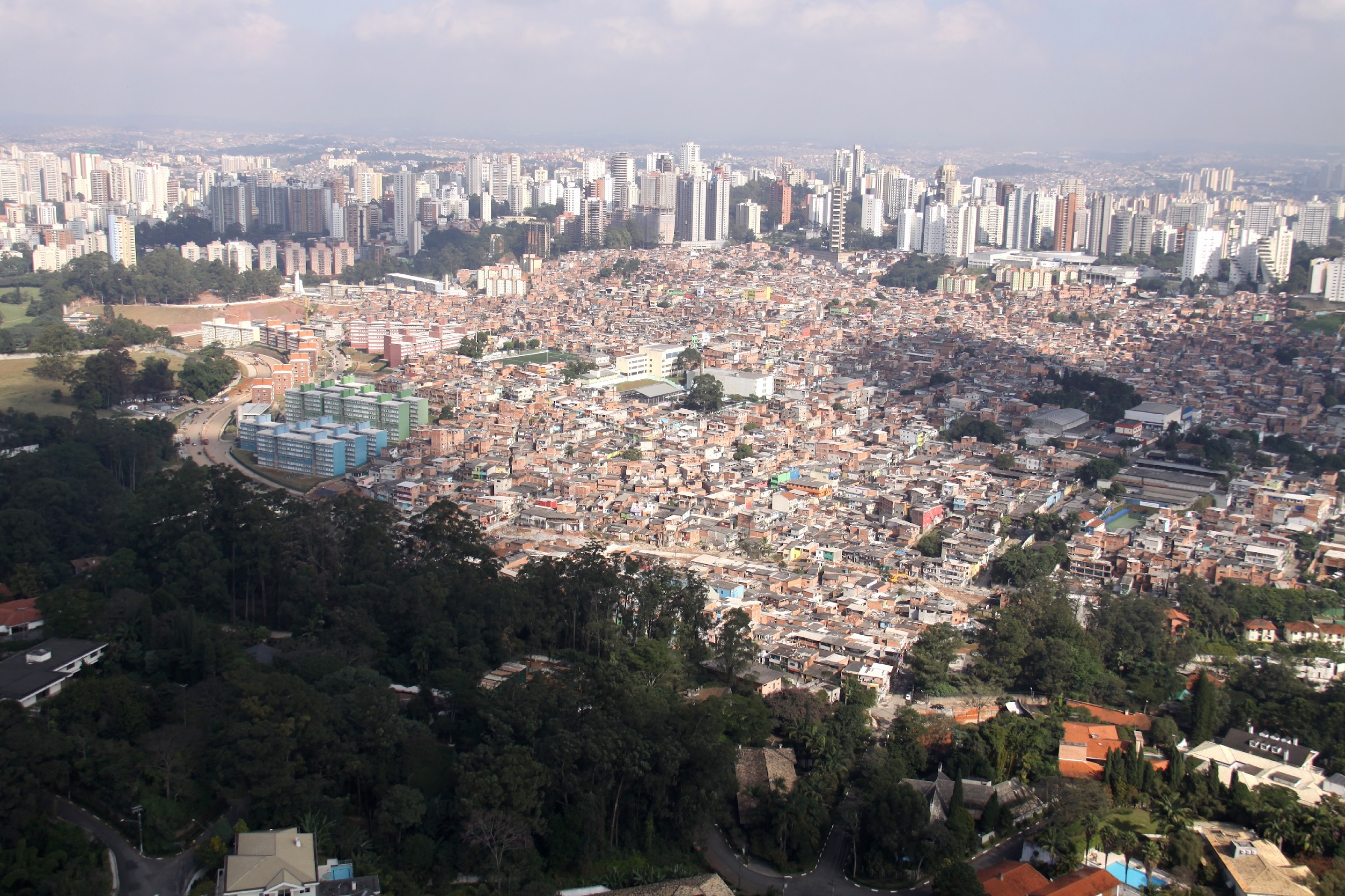
Paraisópolis – the largest São Paulo’s favela view
The 21st-century city undergoes rapid changes, resulting in the constant replacement of existing territories or the transformation of precarious territories that have grown informally without regard for land usage and occupation regulations.
The 20th century began with an urban population in the order of around 108 million people and came to an end a hundred years later with around 2.9 billion people living in cities. Incorporating within urban life a contingent population of this magnitude represents a demonstration of people’s adhesion to urban life.
At the same time, the population living in precarious settlements has also been increasing, exceeding one billion people, according to figures published by UN-Habitat for 2024, most of them without access to basic sanitation, clean water, housing in risk areas and an important part of this population requiring new housing units for resettlement.
These numbers underscore the importance of architects’ participation in addressing these problems, with a focus on the social dimensions of architecture and urbanism. The theme of the initiative is the global challenges of confronting urban vulnerabilities and inequalities. Considering this urban reality common to most urban agglomerations, and with the aim of researching and disseminating the work that architects from all continents have been developing in the search for solutions to minimize the precariousness in which millions of people live, in 2024, the UIA created a new work program, the Work Programme Informal Settlements – WPIS.
The informal settlements are an urban phenomenon established within the city’s territory, and therefore an integral part of it, one of the elements of urban morphology that shape its design. So, nowadays it is no longer possible to accept a concept of the informal city centred on negative parameters, which are sustained around ideas of absence, deficiency and homogeneity and adopt as significant that which the informal city is not, as compared with an idealized model of the city.
It is important to make a start on the planning of urbanization projects which would not just be a mirror of the conventional city; on the contrary, projects for outlying regions characterized by every kind of precariousness ought to opt for a definition based on their own new relations of space, time and distance that take in both the disruption and the order within the various occupations.
These are the possibilities we have for the coming decades, of helping to build a less unequal city, a city where opportunities can be shared more fully by its citizens as a whole. To build a city where urban living, the terms of social interaction, of exchange between differences may be permanently guaranteed.
The question of sustainability, so much focused on today, in the case of cities, needs principally to take a line of reflection on this capacity of the city to formulate place, to organize the place of social exchange, of interaction.
The city of the future is obviously opposed to the city of ghettoes, the city of isolation, the city of closed condominiums. In this sense, in the clash of perspectives, perhaps the example of urban projects in informal settlements is one of the most powerful instruments for guiding our reflections.
It is precisely the informal settlements, which have a morphology of its own or several morphologies that tell us that once considered an integral part of the city, with its own equipment, its own updated infra-structures, it may become objectively a good place to live in, with adequate public services so as to constitute differentiated and, over time, enriching urban forms, part of a larger urban whole where variety, diversity and exchange between differences can become our everyday life.
Contemporary thought views informal settlements as an urban phenomenon established within its territory, thereby making them an integral part of the city, one of the elements that shape its morphology. In contrast to the dominant mindset that views informal settlements as a “focus of problems” and an “undesirable neighbourhood”, informal settlement dwellers do not see themselves as the subject of this mindset. For them, the urbanization of their territory is a solution that will allow their permanence in the locale, as well as the possibility of future investments in their homes.
This is a common reality in metropolises located on all continents. Creating a network of successful experiences, resulting from creative and serious projects by architects and urban planners, is a path to the universalization of good practices. Successful experiences in transforming new neighbourhoods share a central focus: the construction of a future project that is linked not only to building new housing, but also to overcoming deficits related to infrastructure, accessibility, equipment, and services.
This new perception is adopted by WPIS and provides the basis for developing a way of thinking about the informal city and the districts produced by the poorest people, which incorporates the efforts previously made by families as a starting point for constructing a plan for future interventions.
Cities are working to be bold and try to make a leapfrog into the formal city: by providing access, by connecting it to infrastructure, by creating job opportunities and so forth and so on; and we need to do this all at once, so that the informal city becomes more resilient, economically viable and ecologically sustainable. In short, if possible, in certain ways, we need to make it more crisis-proof than the formal city.
This is the main objective of the WPIS: to highlight the importance of urbanization projects for the so-called “informal” city, not as being out of the ordinary but rather representing a new relationship that architects ought to establish with the population living in less privileged districts. A population that today expects creative solutions that accord with the demands of the city of the 21st Century.
UIA WPIS seeks these goals because we believe that the city, recognized as a privileged space for human relations and an eminently democratic forum, allows opposing values to coexist and be confronted, countering the conservative ideas of isolated communities. This privileged role that the city has adopted – a space for democratic communal living – relates to the extension of access to opportunities to all its inhabitants.
Programs for the urbanization of informal settlements, developed with the support of architects worldwide, suggest a new direction for future interventions and public policies. We learned the importance of respecting the social and economic investments that the communities and residents had made over the years, of restructuring their physical space in a responsive and respectful manner, and of promoting the integration between the slum communities and the city around them through design in a sustainable and environmentally responsible manner.
To understand the Informal Settlements
Informal settlements are an urban phenomenon that must be considered a real part of the city structure, one of its morphological elements, which defines the urban design, although informal, and has two main characteristics when compared to the formal city.
The first of these: their designs do not adhere to any established urban rules or legislation; the road system is not defined prior to housing construction, and water and sanitation infrastructure are implemented after occupation by dwellers. The second characteristic is that the housing units are built according to the available empty spaces.
This process of occupation is known, in general, as “unallowed occupation”, either in public or private land. As a result of these two singular characteristics, the slum, regarding its high complexity, scale and diversity as an urban phenomenon, has been studied starting from some negative pre-concepts, which are sustained by the idea of lack, privation and homogeneity, leading towards a mistaken meaning when comparing the slum with the ideal, classic and traditional pattern of a desired city.
Besides the fact that the slums are not based on any formal or legal hegemonic parameters, which the public sector and the real estate market have defined as the official urban land use, the slums undermine any certainties about the ideal urban standards. Slums are the final representation of urban social inequities, characterized by poverty, continuous growth, and expressive social spatial segregation. These inequities are the result of a crude national income concentration.
Facing this reality, any design or upgrading proposals to improve these degraded areas, which have high indexes of social and health vulnerability and where a significant portion of the poorest population lives, must take into consideration that these settlements are located within the real city.
It must be understood that each slum was built as an answer to the social exclusion process and spatial segregation, but at the same time, it is for its inhabitants, a clear auto-protection alternative, regarding huge metropolitan growth. Formerly seen as a reflection and mirror of an uneven society, the actual recognized social diversity of slums appears nowadays as the key to solving urban problems as a whole.
Informal Settlements Upgrading – Main Concepts
Informal Settlement upgrading is regarded as an important component of strategies to fight poverty because investments in basic infrastructure and services contribute significantly to reducing the inequalities faced by families living in these informal settlements. The investments also have a significant impact on the well-being and quality of life of the communities. Slum upgrading became a pivotal part of housing policy because it promotes actions that directly contribute to improving the stock of housing solutions accessible to low-income families who would otherwise be unable to access credit and the formal private market.
This process of change in the housing policy models led to the approval of an international action plan centred on the search for social development and the eradication of poverty during the United Nations’ Second Conference on Human Settlements (Habitat II) in Istanbul, Turkey, in 1996. This plan was a historical landmark for establishing the new values and concepts that today form the basic framework of international public policies.
The primary purpose of upgrading informal settlements is to address shortages in infrastructure, accessibility, and the availability of social facilities and public services, as well as to provide new, suitable housing for families whose homes are affected by public works. The primary goal is to respect the existing community and maintain the majority of families in their current locations, ensuring the continuity of the investments they have made in building their homes over time.
The second main goal in slum upgrading is the qualification of public space, which is not only to increase its qualities as social and recreational public spaces but also as important elements that can promote the physical integration of the community with neighbouring areas and their recognition as part of the formal city. Thus, besides solving problems such as sanitation, drainage, accessibility, land stability and environmental risk factors, these projects face the challenge of providing quality well-equipped public spaces, considering their potential for promoting social encounters and public life.
In addition, projects have to deal with daunting soil and topographic conditions, local existing urban and architectural morphologies, and the availability of land in order to generate a well-articulated final environment where all residents have access to basic infrastructure and public spaces, services, and facilities, allowing their population to exercise neighbourliness and reach full citizenship. Considering that slums are determined by historical, morphological, social, and locational conditions (such as flood zones, hill sides, river banks, and railroad right-of-ways), upgrading projects must be tailored to each situation and are therefore necessarily different from one another. Additionally, projects should be widely discussed with residents, and cultural diversity is a crucial factor in determining architectural solutions.
In slum upgrading, a paved road system is designed to allow vehicular access for public services (ambulances, police, mail, waste collection) as well as for the installation of drinking water, sewage, and drainage systems. Dwellings in environmentally sensitive areas, such as flood zones and steep hillsides, are relocated, fragile slopes subject to landslides are stabilized, and streams are protected or managed through canalization. Public equipment, spaces for parks, leisure and recreation are defined as community centres, and guarantee the full development of activities that strengthen community relations.
Taking the city itself as a source of solution, slum upgrading is mainly aimed at building quality public spaces that respect environmental and cultural pre-existing and that, above all, dilute the urban and symbolic frontiers between the formal city and its informally developed and marginalised areas. Slum upgrading and their integration into the city by providing them with proper public infrastructure, facilities, and services increases these communities’ accessibility to work, study, and healthcare, and encourages them to invest in improvements to their homes. Slum upgrading is a fundamental step towards contemporary urban life and complete citizenship.
The challenge is that the construction of the city must be based on the understanding and management of differences, in the search for social inclusion and the proactive involvement of the communities in institutions at all government levels, and civil society. This is how a democratic city should be constructed.
Final Remarks
It is always important to remember that our point of concern is the city and its new neighbourhoods, which are being built every day precariously, lacking proper infrastructure and with extremely low levels of environmental quality. We no longer conceive the existence of a formal city that is legal, and another that is informal and built outside the law. We can no longer view slums as sub-standard buildings that need to be evicted, but as communities that have invested their lives and savings in securing a space in the city, in the only locations they had access to. Their social networks have allowed them to survive the hardships of their daily lives and represent the greatest wealth of their settlements. These communities are building the true contemporary city, albeit they lack the mechanisms to access proper land tenure, housing, public facilities, educational and economic opportunities.
Keywords: Informal settlements, Inclusive urbanization, Urban inequality, Socio-spatial integration, Social architecture.