
The year 2025 marked the successful achievement of several key milestones for the UIA. Numerous important projects are currently under development and are expected to be finalised in time for the 2026 UIA World Congress and General Assembly in Barcelona.
1. UIA COUNCIL
2025 Priorities
Transparent and collegial governance, professionalisation of the Secretariat, and increased UIA relevance through the work of Working Bodies on priority topics and targeted collaboration with international organisations on concrete projects.
- Organisational focus: Revision of Articles and Bylaws, reinforcement and professionalisation of the Secretariat.
- Thematic focus: Role of the Architect and the Future of the Profession, Artificial Intelligence in Architecture, Sustainable Urbanisation, Sustainable Tourism, Natural and Human Disasters
- Relevance increase: Intensification of targeted collaboration with international organisations on concrete projects, and alignment of Working Bodies’ work with term priorities. All UIA Working Bodies are linked to international organisations working in the same thematic areas in order to enrich exchanges, share experiences, and increase the relevance and the impact of the outcomes. The UIA must ensure and further develop its expertise.
Council Meetings
The Implementation of Collegial Governance requires frequent Council meetings and active participation
In 2025, the UIA Council convened six times online and twice in person:
- 170th Council Meeting (Online – 04.02.25): Focus on Internal Affairs and Membership Fees
- 171st Council Meeting (Online – 04.03.25): Focus on Events, Prizes and Awards
- 172nd Council Meeting (Online –01.04.25): Focus on Finances, Webinars, UIA Competitions
- 173rd Council Meeting (In person – Barcelona, 04-05.05.25)
- 174th Council Meeting (Online – 01.07.25): Focus on Events and Projects (EDUCOM, SDGC)
- 175th Council Meeting (Online – 02.09.25): International Relations, UIA Events, Arch-E
- 176th Council Meeting (In person – Seoul, 20-23.10.25)
- 177th Council Meeting (Online – 09.12.25): Focus on PPC work (AI, IP)
Five additional Council Meetings are scheduled in 2026 for the remainder of the mandate.
At the invitation of the respective Member Sections, in-person Council meetings will take place in Mérida, Mexico in March 2026, and in Barcelona in June 2026.
Council Committees
Code of Conduct and Financial Regulations Finalised, Revision Ongoing: The Council Committees continue to play a strategic role in supporting UIA governance, ensuring focused work across core thematic and operational areas. Each committee is tasked with contributing proposals, refining internal processes, and preparing recommendations for the current and future mandates.
Finance: Council Member and Co-Chair of the Finance Committee, Paula Huotelin (Finland), was appointed as Acting Treasurer during the absence of Treasurer Seif Alnaga due to health reasons. Council Member László Mikó (Hungary) was named Co-Chair of the Finance Committee.
- Vision and Strategy
- Chair: Li Zhang, Vice-President Region IV
- Evaluates international relations, develops financial strategy, and prepares recommendations for the next term
- Events
- Chair: Nivaldo Andrade Vice-President Region III
- Analyses the future of UIA events, supports promotional efforts, and reviews calls for proposals and contractual documentation.
Joint initiative: The Vision & Strategy and Events Committees jointly proposed the organisation. of two UIA International Forums per term, a principle adopted by Council at its 175th meeting. They also proposed the development of a World Capital of Sustainable Tourism programme to be developed in collaboration UN Tourism.
- Finance
- Co-Chairs: Paula Huotelin (Acting Treasurer), Council Member Region I and László Mikó (Hungary) Council Member Region II
- Oversees the budget and financial regulations, reviews the membership fee structure, and contributes to the development of sponsorship guidelines.
- The principles of the financial regulations were adopted by Council at various meetings and will be part of the Handover Manual.
- Ethics
- Chair: Jerzy Groschulski, Vice-President Region II
- The Committee finalised the UIA Code of Conduct for UIA Member Sections and UIA’s elected and appointed representatives, that was adopted at the 176th Council meeting in Seoul and is now working on procedures for disciplinary action.
- Revision
- Chair: Vity Nsalambi, Vice-President Region V
- Discusses further revision items to bring to vote at the 2026 General Assembly and elaborates recommendations for next term.
- Communication
- Chair: Teresa Taboas Veleiro, Vice-President Region I
- Develops a standardised programme and annual calendar of communiqués, and completes instructional materials and a graphic toolkit to support consistent UIA branding and outreach.
Code of Conduct
The UIA’s Code of Conduct for UIA Member Sections and UIA’s elected or appointed representatives was finalised by the Ethics Committee and adopted by the UIA Council.
At its 176th meeting, the UIA Council adopted the Code of Conduct for UIA Member Sections and the UIA’s elected or appointed representatives. It will be integrated in the UIA Regulations as Annex VII and presented at the Barcelona General Assembly.
The UIA’s Code of Conduct serves as a guiding framework for ethical behaviour, professionalism, and integrity in all aspects of UIA activities. It reflects the UIA’s core values, responsibilities, and commitment to upholding the highest standards of conduct in interactions with colleagues, partners, and the public. Any individual associated with the UIA is expected to demonstrate respect, fairness, and accountability in its professional and personal conduct. This Code outlines the principles that govern conduct, ensuring operations are carried out with transparency, honesty, and a commitment to excellence.
The guidelines set forth in this document apply to all UIA Member Sections and UIA’s elected or appointed representatives associated with the UIA (all members, and representatives of the UIA), regardless of role or seniority. They align with legal and regulatory requirements, as well as best practices in the industry. Adherence to this Code is essential in fostering a positive, inclusive, and ethical environment. Violations may result in corrective actions, as maintaining the UIA’s integrity is fundamental to its reputation and success. By embracing these principles, the UIA aims to contribute to a culture of trust, professionalism, and responsibility, reinforcing its commitment to ethical decision-making and mutual respect.
Young Architects
Three young architects competitions, one student competition and a new Young Architects Triennial Prize
- New Triennial prize Promoting Young Architectural Talent
In line with the amendments to Article 1 of the UIA Statutes (Mission and Aims of the Union) and in response to proposals presented at the 2024 Extraordinary General Assembly by the Young Architects Think Tank Coordinator Ayşen Ciravoğlu, the UIA Council unanimously approved the establishment of a new Triennial Prize at its 171st meeting in March 2025: the UIA Young Architects Prize for architectural excellence and innovation in design process. The inaugural edition of the prize will be awarded at the 2026 UIA Congress in Barcelona at the Gold Medal and Triennial Prizes Award Ceremony.
- Successful UIA-Endorsed Young Architects Competition in Barcelona: “10 Blind Walls”
Initiated by the UIA, the international single stage open project competition was successfully organised by the Municipality of Barcelona as part of the World Capital of Architecture programme. With 343 entries from 52 countries across all five UIA Regions, the young generation of architects showed strong interest in a UIA competition that not only promotes innovative ideas but leads to a realisation.
The jury awarded prices to each of the 10 Blind Wall sites, located in different neighbourhoods of Barcelona. All 10 winning projects will be realised, with several expected to be completed or under construction by July, when the Congress takes place. A commemorative plaque will indicate that the designs resulted from a UIA competition. Barcelona Municipality will also organise an exhibition during the Congress to showcase the competition projects and their realisation phase. This marks the first implementation of the UIA’s new policy that UIA Congresses should leave a tangible and lasting legacy, in addition to a theoretical one by creating realised projects of public interest in the World Capital of Architecture city.
- Successful UIA Young Architects Competition: “The Future of the Profession: Empowering the Next Generation in Participatory Urban Design”
Launched on 7 January 2025 at the initiative of Council, this international single-stage open ideas competition for young architects focused on critical challenges facing UNESCO World Heritage Sites in urban contexts. With 139 proposals from 45 countries across all five UIA Regions, this competition was a great success. Participants selected 101 different sites for their submission. This posed a real challenge for the jury but also sparked a high level of discussion on the topic. The award ceremony was held on 7 May 2025 at UNESCO’s Palazzo Zorzi in Venice. The exhibition of the winning projects was part of the official UNESCO programme for the Biennale and remained open until its closing.
- Ongoing UIA Young Architects Competition “Architecture in the Aftermath of Disasters”
This international single-stage open ideas competition addresses the rebuilding of an urban area destroyed by disaster. It is organised by the UIA Human and Natural Disasters Work Programme, with expert support from the Order of Architects of Morocco. Participants are asked to propose solutions for a specific area in Morocco affected by earthquakes. The competition aims to raise awareness about the complex interplay of natural and human-made crises and to solicit visionary proposals that heal, protect and regenerate. It was launched on 13 November 2025, with a submission deadline of 11 March 2026. The exhibition and the award ceremony will take place during the Barcelona Congress.
- Ongoing UIA Congress Ideas Student Competition “Catalysts of Resilience”
Organised by the curatorial team of the 2026 UIA Barcelona Congress, this international single-stage open ideas competition invites students to engage with the theme “Catalysts of Resilience”. Participants are encouraged to address vulnerable places at risk of future habitational discomfort, inequality, or collapse. The competition calls for spatial interventions that support resistance and adaptation to foreseeable threats resulting from political shifts, social transformations, and climate change. Proposals should explore how resilience can be fostered by using time as a design tool. The competition was launched on 15 July 2025, with a submission deadline of 7 November 2025 The exhibition and the award ceremony will be held during the 2026 Congress in Barcelona.
UIA Forums
At its 174th meeting, the UIA Council approved the introduction of a second UIA Forum per term, marking a significant step towards increasing the organisation’s global presence and visibility between World Congresses. This new format responds to growing demand for more regular international architectural dialogue and engagement.
The Council recognised that these Forums will serve as dynamic platforms to explore emerging themes in architecture, urbanism, and sustainability, distinct from those of the triennial Congresses. More frequent Forums will allow the UIA to reach broader audiences, strengthen regional participation, and maintain continuity in its global initiatives, particularly in fast-evolving areas such as climate change, artificial intelligence, and responsible tourism.
The 2027 UIA International Forum will take place in Mumbai from 24 to 28 September 2027 under the theme “Urban Regeneration”.
A call for bids to host the Forum in 2028 was launched on 17 September 2025. The deadline for submission of bids is 2 February 2026. Member Sections are encouraged to consider submitting a candidature for the 2028 Forum.
The host city will be selected at the 2026 UIA General Assembly in Barcelona.
Other Council Decisions
- Motion regarding Palestine
At its 175th meeting, held online, the UIA Council considered a motion submitted by Region V Council Member, Mohamed Sahby Gorgi (Tunisia), concerning the situation in Palestine. The Council resolved to adopt the following measures:
- Condemn the genocide committed by Israel in Gaza.
- Request an end to starvation by allowing the entry of food and medicine and ensuring the fair and safe distribution to citizens.
- Call for an immediate ceasefire and cessation of hostilities.
- Condemn the destruction of Palestine’s built heritage.
- Appeal to architects worldwide to refrain from any participation in the illegal colonisation of Palestine.
- Request an international assessment of the destruction.
- Offer the UIA‘s moral and expert support, through its Working Bodies, at every stage: damage assessment,technical expertise and reconstruction.
- Contribute to improving living conditions in Gaza and restoring dignity to the Palestinian people
- Adherence to UNDRIP
At its 176th meeting in Seoul, the UIA Council unanimously adopted a motion submitted by the UIA Indigenous People Work Programme to adhere to the United Nations Declaration on the Rights of Indigenous Peoples (UNDRIP). The Council mandated the Secretary General, in collaboration with the UIA Indigenous Peoples Work Programme, to further develop the concept of a dedicated task force. This task force will be responsible for preparing guidelines and best practices for implementing UNDRIP principles within the architectural profession.
2. INTERNAL AFFAIRS
Revision of Statutes
The revised Articles and Bylaws, including the decisions taken at the 2024 EGA in Kuala Lumpur, are now in force and published on the UIA website. The second part of the revision is in preparation.
With the adoption of the principle of collegial governance, the revised conflict-of-interest policy, the mandatory appointment of an independent auditor and a legal advisor, the modification of responsibilities for the preparation and conduct of elections, and the institutionalisation of Council Committees, the UIA has taken an important step towards becoming a more democratic, transparent, and well-structured organisation. With a clearer mission, the UIA is now stronger and better equipped to define its priorities and guide its actions.
The second part of the revision of the Articles and Bylaws– including provisions for more transparent and efficient governance, clarifications regarding conflict-of-interest cases, and financial regulations–is in preparation and will be presented for a vote at the 2026 General Assembly in Barcelona.
Retrospective Audit
The 2018-2022 Accounts Report was finalised in January, presented to Council in February and published on the UIA website. The auditors’ recommendations are implemented.
At the beginning of the 2023-2026 term, and in the interest of transparency towards all Member Sections, the UIA mandated an independent auditor in October 2023 to conduct a retrospective audit of the 2018-2022 accounts, in response to concerns expressed by some Member Sections regarding accounting practices. The report was finalised in January 2025 and presented to Council at its 170th meeting in February 2025.
The audit did not reveal any unjustified misstatements. Minor discrepancies detected were examined in detail and were explained. The accounting records did not present any significant risks of fraud or undetected errors. However, the report concluded that the UIA’s internal procedures for approving, validating and paying expenses during the mandates from 2018 to 2023 suffered from a number of shortcomings (lack of formalisation and separation of key functions; accumulation of approval, validation and payment powers in the hands of the Administrative Director; excessive dependence on a single individual) exposing the UIA to increased risks of fraud, error and misappropriation of funds.
The audit also identified major deficiencies in the Secretariat’s human resources management and payroll processes, which placed the organisation at financial, legal, and operational risk. All recommendations regarding approving and validating expenses have been taken into consideration by the current mandate and were already implemented at the start of the 2023-2026 term. HR procedures have been formalised, and previously missing regulations for the Secretariat have been elaborated and are now in effect.
Financial regulations have been proposed by the finance committee and the principles approved by Council. Furthermore, the UIA has ensured the collaboration of a Human Resources consultant since March 2024.
Paris Headquarters
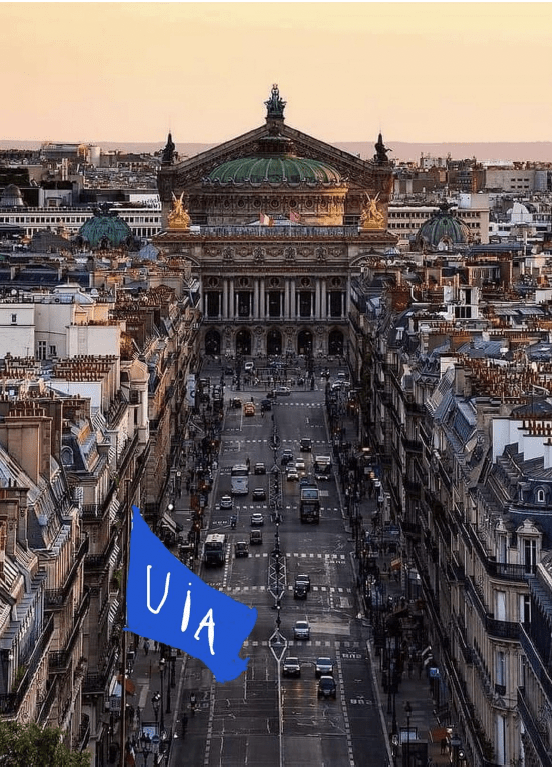

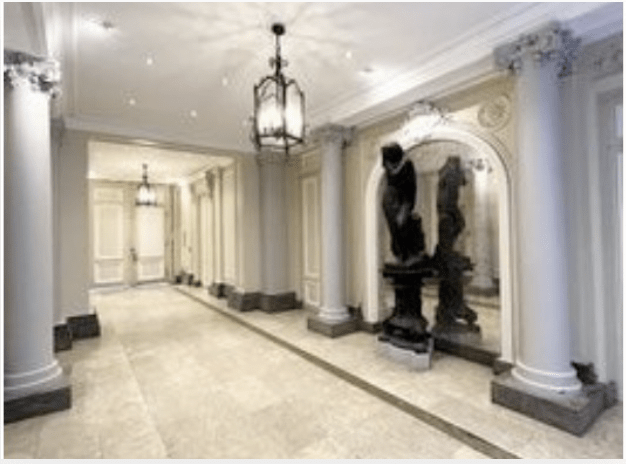

New Address: 20 Avenue de l’Opéra, 75001 Paris
The UIA–graciously hosted by the CNOA since 2007–had to leave the Montparnasse Tower before the end of 2025. After several postponements in recent years the refurbishment works were scheduled to begin. A proposal to relocate the UIA Headquarters to Lausanne, where the Municipality and the State of Vaud had offered prestigious premises free of charge, did not receive the required two-thirds majority at the 2024 Extraordinary General Assembly.
Since the beginning of 2025, efforts were undertaken to identify suitable premises in Paris. As the French authorities did not offer a solution for relocating the UIA headquarters, the “Paris Headquarters Task Force” chaired by the President, conducted a search on the open market. After evaluating several options, appropriate premises were found in the centre of Paris, and a six-year lease agreement was concluded. The UIA Secretariat relocated to the new address on 18 June 2025. For the first time in the UIA’s history, the Union has its own place and address. The Union will now be paying rent, which has serious implications for the budget.
Executive Director: Successful Call and Appointment
Successful Call and Appointment
Following the resolution adopted at the 2023 Copenhagen Assembly to strengthen the UIA Secretariat and to establish a formal process for appointing an Executive Director, a detailed role profile and task description were defined with the input from external experts. A selection panel was constituted, and an open call for applications was launched and published in January via the UIA website, UIA mailing list, LinkedIn, Indeed, and APEC.
A total of 48 applications were received from candidates representing 18 different countries. Among several highly qualified candidates, the panel unanimously selected Olga Mihalikova from Slovakia for the position.
Holding a Master’s degree in Economics and Business Management, and bringing experience as Chief Executive Officer of both a Chamber and an Association of Architects, she was unanimously considered the most suitable candidate for the position. Olga Mihalikova took up her new role mid-June.
Secretariat Reinforcement
Final phase for Reinforcing and Professionalising the Secretariat Completed
A head-hunter was hired in September to identify qualified candidates for the posts of Executive Assistants. The panel selected two assistants to reinforce the Secretariat starting in January 2026.
The call launched in September for the positions of Competition and Awards Officer and Events Officer was also successful. In October, the panel unanimously selected two architects, with relevant experience for the respective posts. Both will serve as independent service providers and assume their roles in January 2026.
Online Tool for Nominations
Enhancing efficiency, transparency, and governance through digital nominations
As part of the UIA’s commitment to professionalisation and digitalisation during the current triennium, Council approved the introduction of a dedicated online nomination tool. The platform aims to streamline and harmonise the nomination process, making it more efficient and transparent for Member Sections, nominees, and the UIA Secretariat. It will centralise nomination data, reduce administrative workload, and support consistent and accurate submissions. The tool will also be used for the nomination of UIA Working Bodies at the beginning of the next term, ensuring continuity and improved governance processes.
Handover Manual
Ongoing Progress in the Elaboration of the Handover Manual
The aim of the Handover Manual is to provide an easy and clear overview of the UIA organisation, activities and contractual obligations and facilitate the transmission of affairs to the next mandate. The Manual is structured in following chapters: Immediate take over, UIA Structure, Headquarters and Secretariat, UIA Financial Regulations, UIA Activities (Congresses, Forums, World Capital Programmes), UIA Relations, UIA Vision & Strategy, Communication, UIA Policies, UIA Competitions-Awards – Prizes, UIA Commissions and Work Programmes, UIA Reference Documents, Articles and Bylaws in force.
Depending on the nature of the documents, the Manual is organised with two levels of access to ensure confidentiality, where required. The Executive Director is entrusted with the continuous updating of the Handover Manual.
UNESCO-UIA Validation System
Internalisation and Appointment of Validation Manager
At the beginning of the term, the UIA Council discussed the usefulness and future of the UNESCO-UIA Validation System and decided to intensify efforts to promote it. Previously one of the tasks of the Education Commission and conducted with the support of the RIBA, validation has now been entrusted to a new UIA entity acting as a board of experts.
The UNESCO-UIA Validation System is a global framework with high-quality standards, aligned with the UNESCO-UIA Charter for Architectural Education. It aims to be accessible to all Member Sections, thereby enhancing both its relevance and impact within the international architectural education community.
The Validation Board clarified that the UIA seeks to offer a more affordable validation service for all parts of the world and is currently developing a dedicated promotion strategy to support this effort. Following the Council’s decision to strengthen the potential of the UNESCO-UIA Validation System and establish an internal position for a UIA Validation Manager, Thibaut Hofer was appointed to this role in February 2025.
Member Sections
Increase in Membership
At the EGA in November 2024 in Kuala Lumpur, four admissions and three readmissions were ratified. Serbia, rejoined the Union as an independent Member Section in September 2025. The UIA currently has eight more members than at the beginning of the term and comprises 118 Member Sections, representing the national architectural associations of 125 countries.
3. UIA WORKING BODIES
UIA Commissions and Boards
Overview of accomplished and ongoing work
Architectural Education Commission (EDUCOM)
Co-directors: Ashraf Salama and Selma Harrington
- Comparative study on educational systems (completed)
- Data analysis of approximately 300 architecture schools worldwide (completed)
- Webinars on the evolution of profession, the role of the architect, architectural education and related professions
- Review and update of the UNESCO-UIA Charter
- Third edition of the Award for Excellence in Innovation of Architectural Education
Co-directors: Nuno Soares and Deniz Incedayi
- Organisation of validation management and review protocols
- Promotion of UIA-UNESCO validation of systems and schools
- Organisation of regional workshops
International Competitions Consultancy Board
Co-directors: Paula Huotelin and Tibor Fatyol
- Review of UIA Gold Medal and Prizes rules (completed)
- Elaboration of Guidelines on Selection Procedures (completed)
- Review of Guidelines on Nomination of jurors (completed)
- Promotion of UIA professional competitions and competition culture
- Regular consultancy on competitions and awards
- Participation in the Arch-E project as experts
Professional Practice Commission (PPC)
Co-directors: Philippe Klein and Wei Zhang
- Relaunch of the APAW databank on professional practice
- Accord: review and proposals for additions (Chapters on quality, AI, Responsibility-Liability-Insurance)
- Review Guidelines on intellectual property; new Guideline on AI and Responsibility-Liability- Insurance
- Limited-scope global sector study on the role, status and impact of architects
UN 17 Sustainable Development Goals Commission (SDGC)
Co-directors: Cid Blanco and Iman Gawad
- 5th Edition of the UIA SDG Guidebook
- SDG Toolbox
- UIA Atlas on SDG Implementation Metrics (3+3)
- Participation in COP30 and WUF 13
- Collaboration with the International Finance Corporation (IFC)
Sustainability Commission (SC)
Co-directors: Carlos Zeballos and Emna Bchir
- Wisdom of Tradition (publication with positions on sustainability, interviews and case studies illustrating traditional knowledge implemented in modern solutions)
- The project aims to explore the role of culture and tradition in sustainable architecture. While the 17 SDGs provide a global framework for development across three main pillars: social inclusion, economic growth and environmental protection, “Wisdom of Tradition” focuses on the fourth pillar: culture.
Global Survey of Architecture Schools
This first global survey is a unique publication and major achievement of the UIA
Under the direction of the EDUCOM Co-directors Ashraf Salama and Selma Harrington, and with the support of a mandated researcher, a Global Survey of Schools of Architecture was conducted from the beginning of the year and finalised in July 2025. This global survey responds to the critical need to reimagine architectural pedagogy for the 21st century.
Drawing on insights from over 345 architecture schools across 159 countries, it offers a data-rich, globally representative portrait of how architecture is taught, researched, and enacted today.
At the heart of this transformation are four converging forces that are radically reshaping the discipline.
The environmental crisis compels architects to embed climate resilience, sustainability, and ecological consciousness at the core of design education. Simultaneously, digital transformation is redefining both the methods and possibilities of practice, demanding fluency in AI, data analytics, and computational design. Cultural decolonisation is shifting the ethical compass of architectural learning, requiring schools to centre local knowledge systems, indigenous traditions, and social justice. Ultimately, the role of the architect is evolving to encompass policymaking, systems thinking, community engagement, and entrepreneurial leadership. These four forces collectively demand an urgent shift toward pedagogies that are more adaptive, inclusive, and action-oriented.
To investigate how schools are responding to these pressures, the survey is structured around a strategic nine-dimensional framework, encompassing curriculum structure, accreditation systems, faculty profiles, student outcomes, facilities and infrastructure, pedagogy and assessment, industry and community engagement, sustainability and social responsibility, and internationalisation. This framework enables a multi-scalar analysis connecting institutional priorities to broader regional and global trends. It offers an integrated view of how architecture programmes are structured, resourced, and aligned with evolving challenges.
Sector Study
A global study in progress to better understand the role of architects worldwide.
At its 176th meeting in Seoul, the UIA Council decided to mandate a specialised firm “Mizra & Nacey Research” to conduct a limited-scope global Sector Study for the UIA. The study will be conducted in collaboration with the PPC which will provide access to all relevant data from the APAW data bank.
The aim of this Sector Study is to collect data from a sample of countries on the following areas of interest: the social status of architects; the professional impact of architects on built environments; the percentage of buildings designed by architects (compared to related professions); the fee structures of architectural services compared to other professions (e.g. doctors); the scope of architectural services; gender representation within the profession; a basic demographic analysis of age distribution; and economic impact assessment of architectural services within the building sector. The results will be presented to Council in spring 2026 and published in the Members’ Area of the UIA website.
UIA Accord: Important Amendments and Additions
The UIA Accord on Recommended International Standards of Professionalism in Architectural Practice will see the proposal of new chapters on “Quality Architecture and Built Environment”, “Artificial Intelligence in Architecture”, “Responsibility, Liability and Insurances for Architects”. The texts, proposed by the PPC, were approved by Council and will be presented for adoption at the 2026 General Assembly.
Following the priority set for this term to address the topic artificial intelligence in architecture, the Professional Practice Commission (PPC), with the assistance of expert commission members and external experts, drafted a comprehensive Guideline for Artificial Intelligence (AI) in Architecture. It also proposed a UIA policy as a new chapter of the Accord, advocating a responsible and ethical utilisation of AI to enhance architectural quality, safeguard authorship and uphold the public interest. The policy focuses on the ethical and legal aspects, emphasising the importance of maintaining professional judgement and oversight. The Guideline and Policy on Intellectual Property (IP) was updated to include AI-related developments.
Declaring architecture as a discipline of public interest, the Commission also proposed a new Accord chapter and policy titled “Quality Architecture and Built Environment”. It encourages Member Sections to promote architectural quality by developing and adopting architectural policies at national, regional and city levels; establishing dedicated services within public administrations; setting up independent expert committees for architecture and urban planning; implementing participatory procedures in planning processes; fostering a culture of quality; and promoting quality-oriented public procurement.
In addition, the PPC drafted a guideline and proposed a policy on “Responsibility, liability and insurances for architects” . The document advocates that architects should only be liable for matters within their contractually and legally defined scope of services; that liability must be proportionate to fees and limited in duration, starting from project completion; and that where multiple parties are involved, liability should be shared in accordance with actual responsibility (the net contribution principle). It also recommends that architects and firms maintain adequate professional indemnity insurance, and that professional organisations support transparent and fair insurance systems and, if possible, contribute to dispute resolution through peer-based assessment in liability cases.
At its 177th meeting, held online, the UIA Council approved the above documents, which will be presented for adoption at the 2026 General Assembly in Barcelona.
UIA Work Programmes
Overview of accomplished and ongoing work
UIA Work Programmes were invited to develop instruments, toolboxes and methodologies to support professionals in researching, measuring and mapping data relevant to the built environment, with a view to better addressing climate and social challenges. These tools aim to support informed decision-making in building and master-planning processes, improving social, environmental and economic performance while strengthening resilience and sustainability. Several Work Programmes have launched toolbox projects, while others are progressing with work aligned with the UIA 2026 Barcelona World Congress of Architecture. Some of the tools, initiatives and ongoing activities are outlined below in a non-exhaustive manner.
Co-directors: Carolina Pizarro and Mina Sava
- Golden Cubes Awards 2026.
- Preparation of a Workshop for the UIA 2026 Barcelona World Congress of Architecture.
- UIA BEE Charter (Charter for Built Environment Education for Children and Young People) which aims to initiate, encourage and facilitate the Built environment Education on a global scale worldwide.
Co-directors: Allen Kong and Vanessa Lucianna Zadel Velásquez
- Development and finalisation of ISO Standard 5727.
- UIA Natural and Human Disasters Network, a joint initiative with the Natural and Human Disasters WP and Architectes de l’Urgence.
- 2026 Friendly and Inclusive Spaces Award.
- Architecture, Cities and Territories
Co-directors: Karin De Poortere Rivera and Chui-Yi Corrin Chan
- Sustainable City Design Guide Book.
- Community Architecture and Human Rights
Co-directors: Qazi M Arif and Sara Sartini
- My City – Series of webinars.
- Educational and Cultural Spaces
Co-directors: José Freire da Silva and Pedro Barrán Casas
- The Global Atlas of Local Learning Environments is an open-access digital catalogue, with a collection of worldwide examples and solutions and will serve as both a strategic tool aligned with the UN 2030 Agenda and a comprehensive design resource.
- Heritage and Cultural Identity
Co-directors: Kassim Omar and Anju Malla Pradhan
- Webinars and preparation of an Exhibition on “Sustainable Architectural and Urban Projects in Historic settings” for the UIA 2026 Barcelona World Congress of Architecture.
- Indigenous Peoples
Co-directors: Patrick Stewart and Elisapeta Heta
- Request for the UIA to adopt the United Nations Declaration on the Rights of Indigenous Peoples (UNDRIP).
- Informal Settlements
Co-directors: Elisabete França and Carin Combrinck
- Survey on informal settlements in order to constitute a collection of good practices on informal settlement developed in several countries.
- Natural and Human Disasters
Co-directors: Nikolaos Patsavos and Yolanda Reyes
- Development of the Competition: Architecture in the Aftermath of Disasters”.
- UIA Natural and Human Disasters Network, a joint initiative with the Architecture for All WP and Emergency Architects.
- Public Health
Co-directors: Hao Long and Ray Pentecost
- International Design for Health Award.
- Public Spaces
Co-directors: Thomas Chung and Natalia Brener Maceiras
- Development of the Public Space Indicator Global Framework which aims to develop criteria for public space analysis, and compile a global framework for evaluating public space projects and interventions.
Co-directors: Marcela Marques Abla and Philippe Capelier
- UIA Social Habitat Manifesto – Development of self-assessment application tools to establish a universally recognised system for analysing and applying methods in contemporary housing design.
Co-directors: René Kural and Sena Özfiliz
- “One today, one tomorrow” book, lectures, exhibition and seminar for the UIA 2026 Barcelona World Congress of Architecture.
New Work Programme: Sustainable Tourism
Constitution of a new Sustainable Tourism Work Programme
At the start of the term, two new Work Programmes were proposed by the President and Secretary General and constituted to address major contemporary topics: Natural and Human Disasters and Informal Settlements. During the course of term, it became evident that sustainable tourism is an increasingly relevant subject within global sustainability discussions and that the UIA should play a leading role in addressing it.
At its 173rd meeting, the UIA Council decided to establish a Sustainable Tourism Work Programme. Its objective is to bring together architects, planners, and policymakers to explore how architecture and planning should lead the shift towards tourism that heals rather than harms, grounded in accountability, creativity, and ecological intelligence.
The Work Programme will highlight examples of how architecture and urban planning have achieved positive outcomes in this field, to inspire participants and provide a practical framework for applying these principles. It will emphasise the integration of local knowledge and indigenous practices into the design and planning of tourism infrastructure, ensuring cultural and ecological sustainability in the long run.
The call for nominations was launched on 9 September, and by 13 October, several Member Sections had responded positively. The Work Programme will be formally constituted soon and begin its work at the start of 2026.
Reconstruction
A Timely and Relevant Issue Under Discussion
The UIA was founded after the Second World War to help rebuild a devastated world and facilitate collaboration and cooperation between professionals from all over the world. The Union advocates for architecture that contributes to the wellbeing of people, social justice and preservation of cultural heritage, while reminding the profession of its ethical and professional responsibilities; particularly in the context of reconstruction following human-made and natural disasters.
Today, the UIA is challenged to take a step further, to become an active partner of international processes, to contribute with expert advice, and to propose guidelines, methods, and tools leading to solutions. This step requires not only idealism and additional engagement, but also expertise, professionalism, and clear reference guidelines. Such initiatives are currently under discussion.
A number of UIA Work Programmes – Architecture & Children, Educational and Cultural Spaces, Heritage & Cultural Identity, Informal Settlements, Community Architecture & Human Rights, Architecture for All and Natural and Human Disasters – have jointly issued a Call for Dialogue and Support, proposing active participation in the reconstruction of the Gaza strip, while acknowledging that UIA participation can only be considered in circumstances where peace and human rights are being actively pursued in the region.
At its 176th meeting, the Council encouraged the initiative to collaborate in the reconstruction of Gaza and stressed the importance of acting in collaboration with the Member Section and in coordination with the United Nations.
In this context, the UIA Network for Human-Made and Natural Disasters, in which Emergency Architects is a collaborating partner, will be activated.
The UIA Secretary General has contacted both the Member Section and the Mayor of Gaza who are currently working on Master Plan 2050, a collective effort by Palestinian experts.
4. UIA EVENTS
World Architecture Day
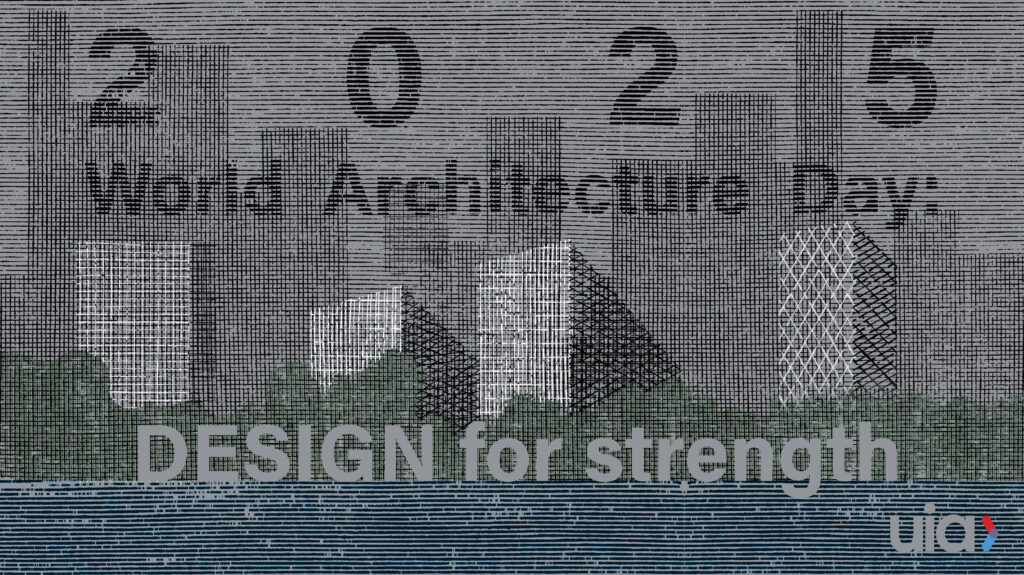
Celebrated on 6 October by the UIA and Member Sections on the theme “Design for Strength”
World Architecture Day, established by the UIA in 1985, was celebrated on Monday 6 October 2025, alongside the United Nations’ World Habitat Day. The UIA Council selected the theme ‘Design for Strength’, calling on architects worldwide to embrace approaches that enable the built environment to withstand, adapt, and regenerate, while promoting equity, continuity, and resilience.
Through this theme, the UIA called on architects around the world to look beyond short-term solutions and embrace approaches that reinforce the ability of the built environment to withstand, adapt, and be rebuilt. Architecture should do more than provide shelter; it must also support equity, continuity, and resilience, especially in times of disruption and crisis. Member Sections were encouraged to explore the theme through public-facing initiatives design, to showcase inclusive and innovative architectural examples from crisis-affected areas, and to promote architectural education that equips future architects to meet the complex challenges in an evolving world.
UIA Upcoming Events
Overview of UIA Events in preparation
- 2026 UIA World Congress of Architects in Barcelona, with the theme “Becoming: Architecture for a Planet in Transition” 28.06–02.07.25
- 2026 World Capital of Architecture Barcelona, Opening Ceremony on 12.02.26
- 2027 UIA International Forum in Mumbai with the theme “Urban Regeneration” on 24-28.09.27
- 2029 UIA World Congress of Architects in Beijing, with the theme “Back to Balance” on 18.06 – 21.06.29
- 2029 WCA Beijing tangible legacy project is in discussion.
Overview of ongoing calls
- The 2032 Congress call for bids was launched in January, bids were submitted by 15 September 2025. The host city will be selected at the 2026 UIA General Assembly in Barcelona
- The 2028 UIA International Forum call was launched on 17.09.25 with deadline for submission of bids on 02.02.26
- The host city will be selected at the 2026 UIA General Assembly in Barcelona
5. UIA PARTICIPATION IN INTERNATIONAL EVENTS
2025 Venice Biennale
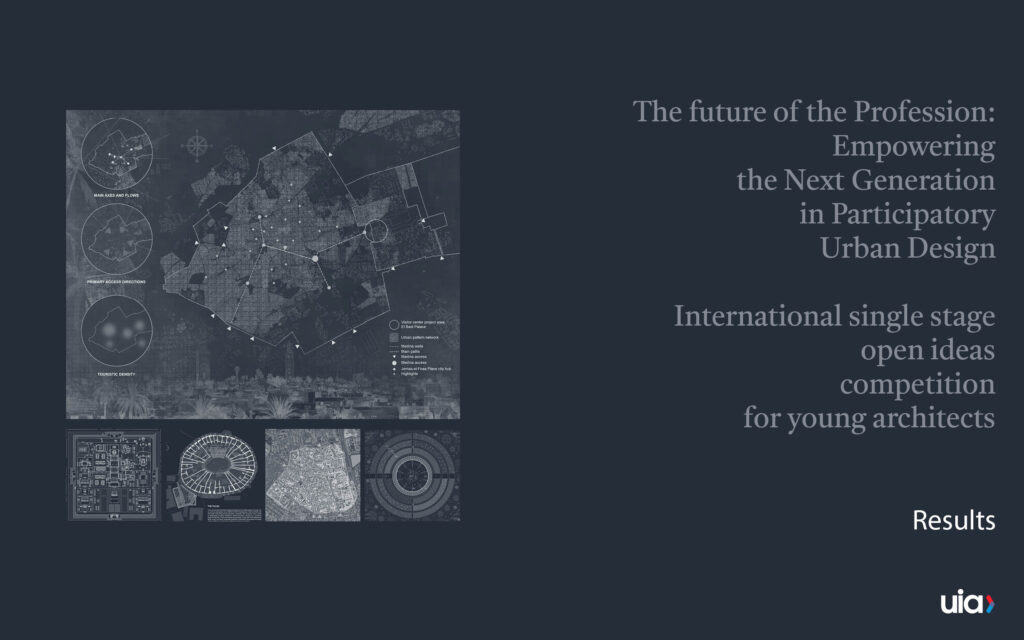
The UIA participated in the Biennale on the theme “The Intelligens Natural, Artificial, Collective” with 2 events
- UIA Exhibition and Roundtable discussion at UNESCO Venice Palazzo Zorzi in May.
The award ceremony of the UIA young architects competition “The Future of the Profession: Empowering the Next Generation in Participatory Urban Design” was held on 7 May 2025 at UNESCO’s Palazzo Zorzi in Venice. It was followed the next day by a presentation of the preparations for the 2026 Barcelona Congress and World Capital of Architecture, and a roundtable discussion titled “Architecture in Transition: From Heritage to Urban Futures”.
The prize-winning entries of the young architects competition were displayed at the UNESCO’s Palazzo Zorzi until the end of the 2025 Biennale. This marked the first time the UIA participated in the official UNESCO programme in Venice.
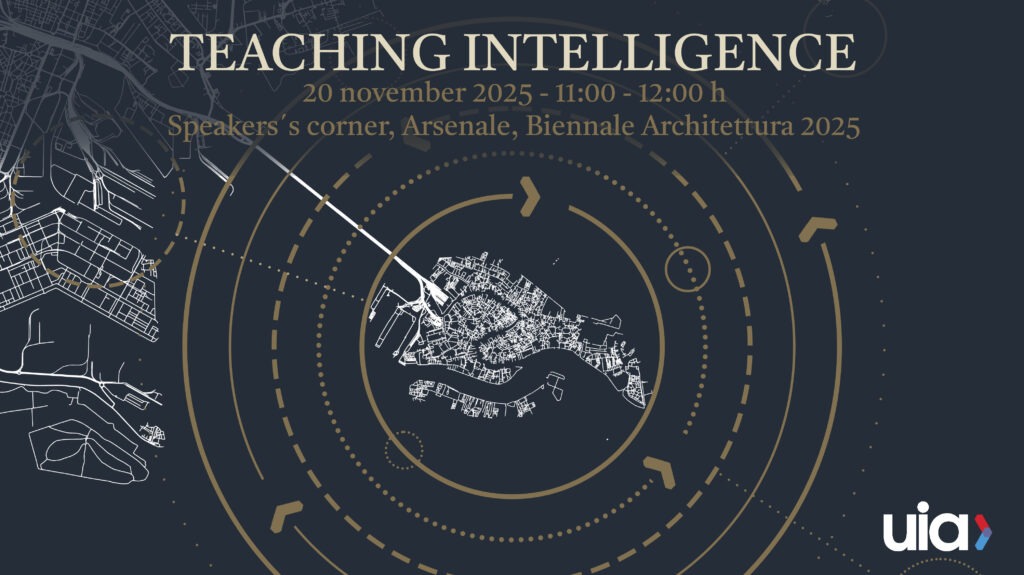
- Cross-regional discussion on “Teaching Intelligence” at Arsenale Speaker’s Corner in November.
At the invitation of Biennale Curator Carlo Ratti, and with the support of Vice-President Region IV, Li Zhang, the UIA organised a roundtable discussion titled “Teaching Intelligence” on 20 November 2025 at the Arsenale Speaker’s Corner. The event was moderated by Prof. Roberto Pagani, with online participation from Deans and Professors of Architecture Schools from all UIA Regions as well as the EDUCOM Co-directors.
The UIA President delivered the opening remarks. A particular focus was placed on the impact of artificial intelligence on architectural education.
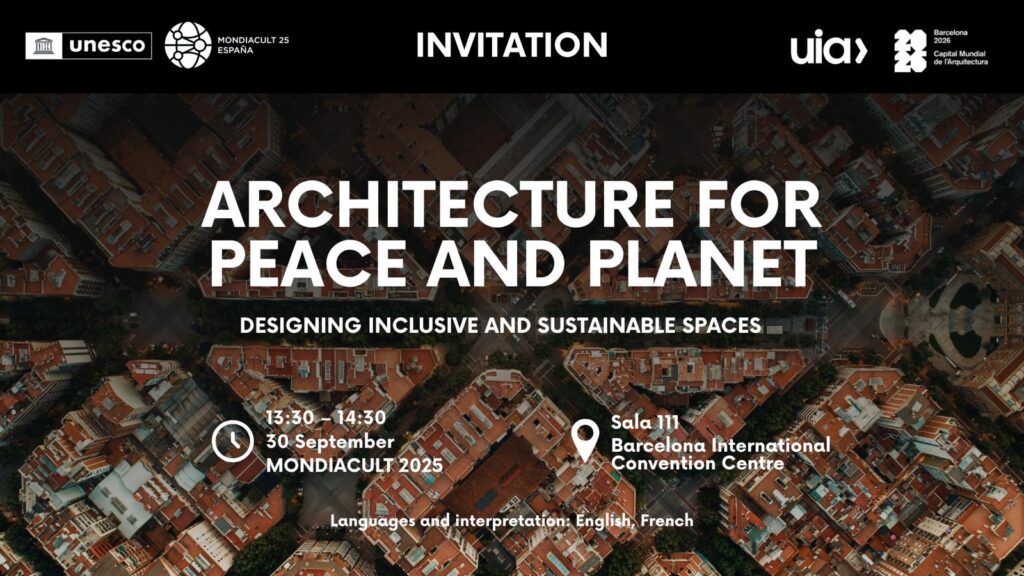
MONDIACULT 25 (Barcelona, 29.09-01.10.25)
Side Event by UNESCO, UIA and the City of Barcelona on “Architecture, Heritage & Cultural Futures”
This high-level side event brought together key decision-makers, including Ministers of Culture and Urban Planning, city officials, and international experts in architecture, heritage, and urban development to explore the role of architecture in shaping cultural futures and inclusive cities. The session provided a platform for dialogue, cross-sector exchange, and the presentation of major international initiatives led by UNESCO and its partners. UIA President Regina Gonthier presented two of the UIA’s most successful collaborations with UNESCO: the World Capital of Architecture programme (since 2018) and the promotion of international competitions (since 1956).
COP30 (Belém, Brazil 10-21.11.25)
Successful UIA participation and collaboration with the World Health Organization for the WHO Pavilion
The UIA had a strong presence at COP30 through its collaboration with the World Health Organization (WHO) in developing the curatorship and design of the WHO pavilion. This brought the UIA for the first time in the blue zone, the core political area of the Conference. UIA Secretary General Rui Leao represented the UIA at various sessions including:
- 2030 Agenda in Cities: Design as a Driver for Climate Action
- Accelerating Solutions for Resilient Urban Infrastructure
- Accelerating action on climate and health
- High level roundtable on transformation of informal settlements
In addition to this, UIA 17 SDGs Commission Co-Director Cid Blanco participated in various sessions on Resilient Cities, further strengthening the UIA’s voice in global climate discussions.
Upcoming International Events
WUF 13 in Baku, Azerbaijan, 18-22.05 2026
The UIA will be present at the 13th World Urban Forum (WUF13) in Baku, Azerbaijan. The programme is currently under development. One of the key highlights will be the award ceremony of the 3rd cycle of the UIA 2030 Award. Organised in partnership with UN-Habitat, this award recognises built projects that make an exemplary contribution to the implementation of the UN 2030 Agenda for Sustainable Development, with a particular focus on Goal 11: Sustainable Cities and Communities.
6. INTERNATIONAL RELATIONS
Collaboration with International Organisations
Focus on specific projects
Strengthening relationships with major international organisations has been declared a goal of this term and is being implemented. Collaboration focuses on specific projects of mutual interest and targeted actions.
Ongoing Collaborations:
- With UN-Habitat: Partnership on the UIA 2030 Award, recognising projects aligned with the UN Sustainable Development Goals (SDGs).
- With UNESCO: World Capital of Architecture (WCA) programme and further areas of cooperation, including recent discussions about the Creative Cities and World Heritage Canopy programmes
- With the WHO, on participation in COP30 and additional joint projects. The UIA is also collaborating with the World Trade Organization (WTO) on thematic sessions of the Council for Trade in Services, particularly on the recognition of professional qualifications.
- With the World Intellectual Property Organization (WIPO) on discussions regarding artificial intelligence.
MoU with UN TOURISM
Memorandum of Understanding with UN Tourism signed, WCST programme in discussion
A MoU between the UN Tourism and the UIA was signed on 01.09.25. A new initiative titled “World Capital of Sustainable Tourism” is under discussion, aiming to link sustainable tourism and architectural heritage.
Urbanisation Charter
Joint project as part of the 2026 World Capital of Architecture Programme
The Urbanisation Charter is being developed at the initiative of the UIA, in the context of the 2026 UNESCO-UIA World Capital of Architecture programme, in collaboration with UNESCO, UN-Habitat, WHO, IFLA, ISOCARP, and the Municipality of Barcelona.
This marks the first time that international organisations and professional bodies work together on a common charter. With this initiative, the UIA seeks to address the quality of urban development for the wellbeing of all citizens and to bring together key professional disciplines and international organisations whose mandates align with this objective.
The Charter will be addressed to professionals, politicians, and citizens, clarifying the role of architecture and urban planning in shaping healthier, more sustainable cities. It aims to translate professional expertise into clear, actionable messages that are accessible to decision-makers and communities, while affirming the societal relevance of the architectural profession. It also seeks to bridge the gap between theory and practice, ensuring that the profession effectively communicates its societal relevance and impact.