Accessibility and inclusive design in public space are not a luxury nor a special provision for a few; they are a fundamental right and a prerequisite for a society of equal opportunities.
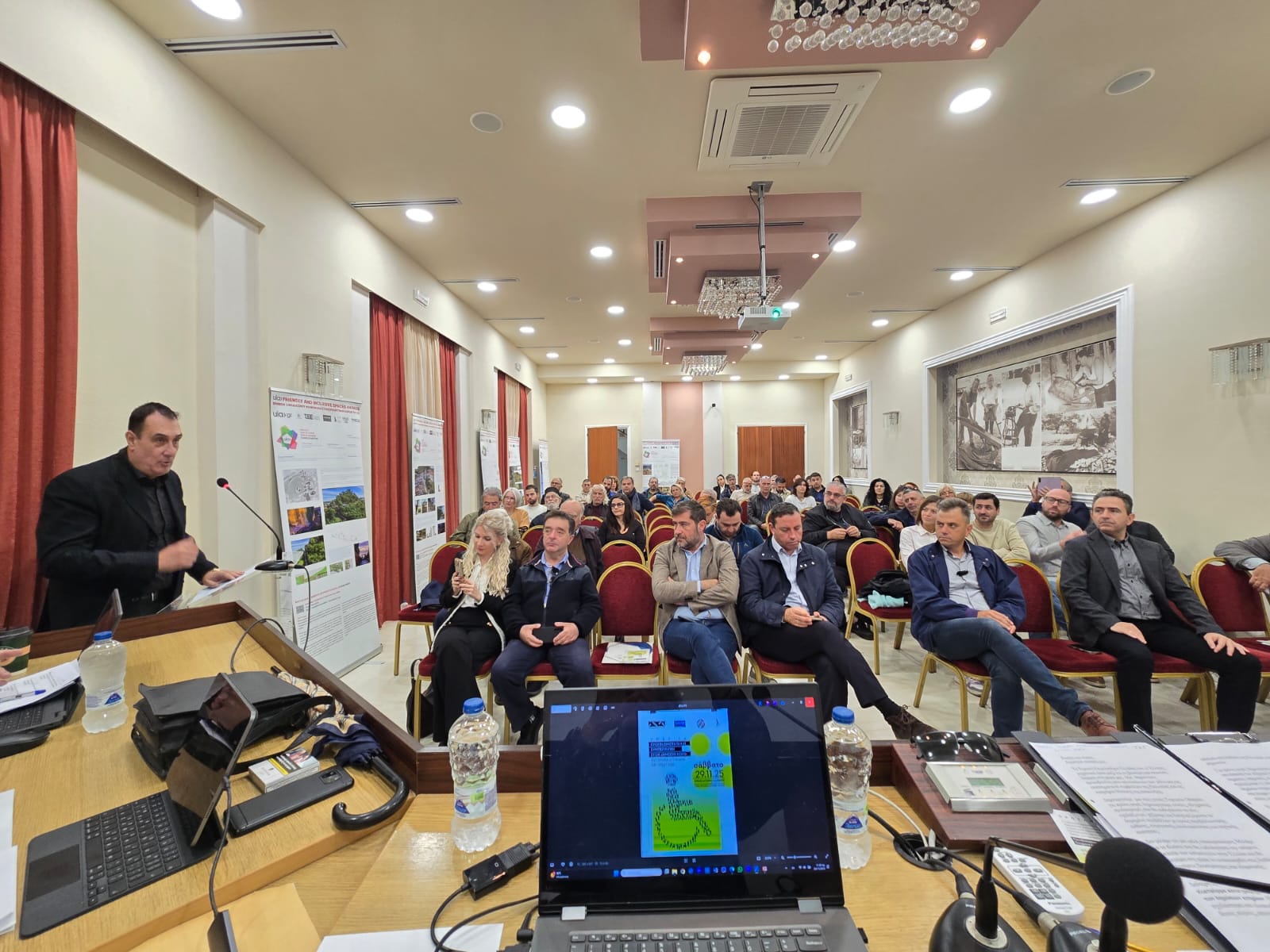
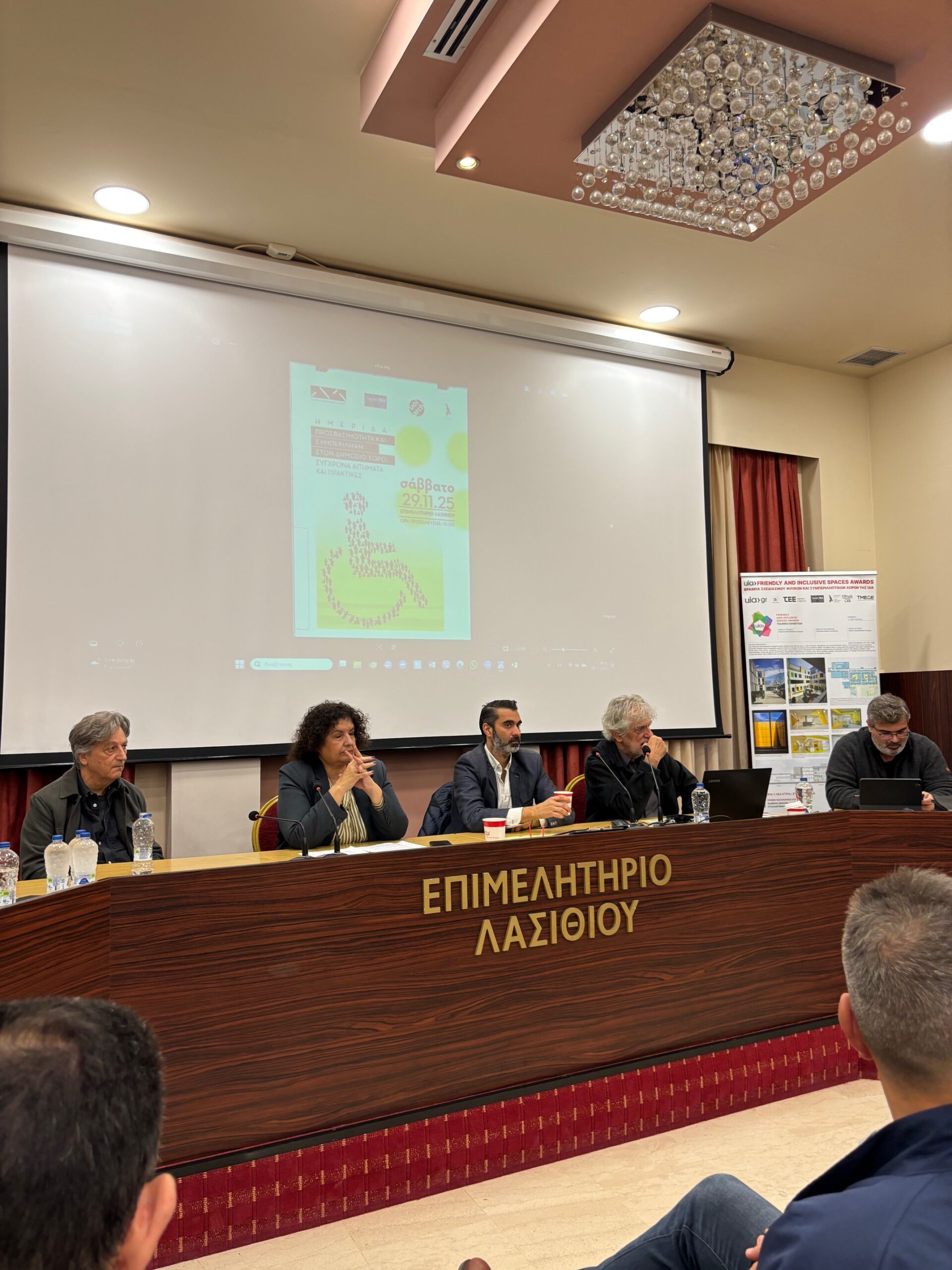
This was the central message of the conference “Accessibility and Inclusion in Public Space: Contemporary Demands and Practices”, held on Saturday, 29 November 2025, at the Chamber of Lasithi in Agios Nikolaos, Crete.
The conference was organised in collaboration with the Lasithi Architects Association, the Association of Greek Architects (SADAS–PEA), the CRISIS Research Laboratory of the University of Ioannina, and the School of Architecture of the Technical University of Crete. Dedicated to the importance of designing public spaces that respect and serve all citizens, the event highlighted—through well-documented presentations and open dialogue—that accessibility is not a technical detail, but an issue of rights, equality and democracy.
The event opened with remarks by Y.Atsalis, President of Lasithi Architects Association. Representatives of institutions and local authorities also addressed the audience, including: the Secretary General of the Ministry of Environment and Energy Efth. Bakogiannis (via online connection); the Deputy Regional Governor of Lasithi, Y. Androulakis; the Mayor of Agios Nikolaos, Man. Menegakis; Em. Professor AUTH and President of the Greek Section of the International Union of Architects (UIA) Fani Vavili (online); the President of the Technical Chamber of East Crete (TEE/TAK), G.Tavernarakis; the President of SADAS–PEA, Dimitris Xynomilakis; and the Deputy Chair of the UIA Work Programme “Architecture for All, Sotiris Papadopoulos (online); written greetings were also sent by the President of TMEDE, K.Makedos, and the President of the Technical Chamber of Greece, G. Stasinos. Speakers included:- Nikos Patsavos, Architect, President of the Department of Architecture at the University of Ioannina and Director of the CRISIS Research Lab. In his lecture “From Sustainable Mobility to Friendly and Inclusive Design”, he analyzed the transition from sustainable mobility models to contemporary human-centered approaches that address the needs of all architectural and public-space users, presenting best practices and highlighting the role of inclusion in urban design.
- Dimitris Xynomilakis, President of SADAS and PEA, who in his presentation “Inclusion, the Pursuit of Equality”, emphasised architecture as a tool of social justice, stressing equality as a central axis of architectural practice and public-space production, and underlining the responsibilities of institutions and the state.
- Dimitris Tsakalakis, Architect and Professor at the Technical University of Crete, whose lecture “Ideas + Realities” discussed the tension—and productive coexistence—between design ideas and real-world implementation, addressing both challenges and opportunities in inclusive projects.
- Maria Siti, Surveying Engineer and representative of TEE/TAK, who in her lecture “Basic Accessibility Specifications in the Road Environment” presented technical requirements and legal obligations, highlighting frequent problems and necessary adjustments to achieve true accessibility in street environments.
- Maria Pratsinaki, Architect and Vice-President of the Lasithi Architects Association, who in “From Theory to Practice: The Difficulties of Implementing Inclusion in Small Cities” presented institutional, economic, spatial, and social obstacles faced by small cities, along with examples from the local context.
- Odysseas Sgouros, Architect, who in his talk “Accessibility and Inclusion in Public Space” outlined key design principles and practical issues affecting accessibility in cities, emphasizing the need for unified design that considers all population groups and envisioning a more vibrant and active city life for people with all forms of disability.
- Angeliki Baltatzi, Social Anthropologist, MSc in EU Studies, founder of HER-autism and member of Autism-Europe. In her lecture “The New Kastelli International Airport: On the Radar of Inclusive and Accessible Design,” she highlighted the importance of inclusion in major development projects, presenting international criteria for accessible design and focusing on the needs of neurodivergent individuals and the necessity of incorporating them in the planning of the new airport.
- The conference was moderated by journalist Nikos Sgouros.
Key themes
The conference addressed a wide range of issues related to inclusive public-space design, including:
-
friendly and inclusive public-space design
-
sustainable mobility
-
technical accessibility specifications in the road environment
-
challenges in implementing inclusive practices in small cities
-
the integration of universal accessibility in major infrastructure projects, such as the new Kastelli International Airport
UIA exhibition
During the conference and in the following days, the travelling exhibition of the UIA International Awards “Friendly and Inclusive Spaces Awards”, part of the UIA Architecture for All Work Programme, was hosted at the Exhibition Hall of the Chamber of Lasithi. The exhibition presented internationally recognised examples of inclusive architecture and urban design.
All presentations offered valuable insights and critical perspectives, reinforcing the idea that inclusive design is a collective responsibility and an essential condition for a society of equal opportunities.
The initiative concluded with a shared commitment to continue promoting policies and practices that advance accessibility, equality and inclusion in the built environment.