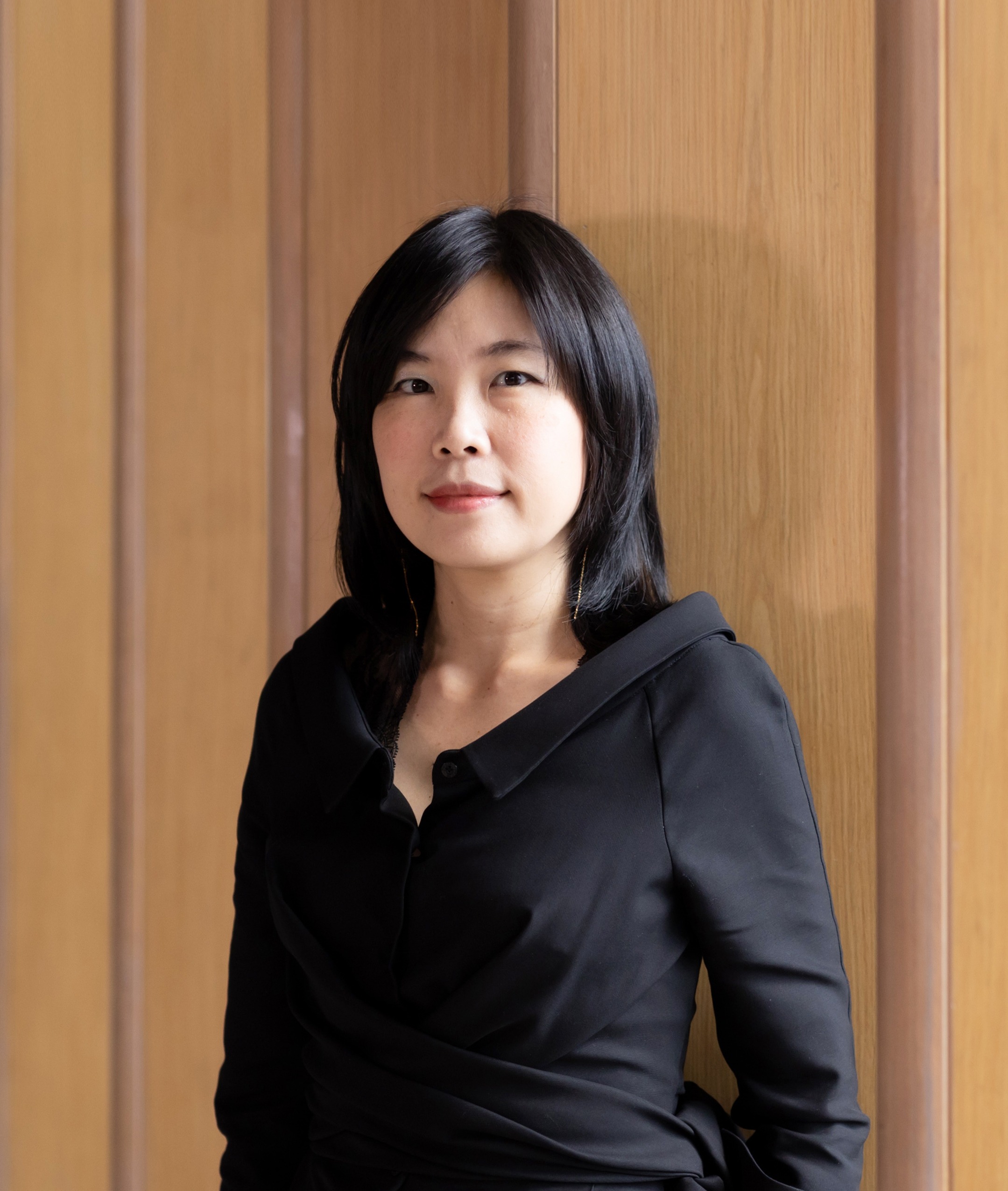
The Association of Siamese Architects (ASA), Thailand, highlights the international achievements of Kulthida Songkittipakdee, co-founder of the Bangkok-based practice HAS design and research, together with architect Jenchieh Hung and Suttahathai Niyomwas.
Their work has received wide global recognition through numerous awards, including the International Architecture Awards from the Chicago Athenaeum Museum (USA), the Créateurs Design Awards (France), the Golden Trezzini Awards (Russia), the Bauhaus Modern Design Awards (Germany–China), the INDE Awards (Australia), and the Asia’s Best Firm in Architecture Design Award (Singapore). Notably, HAS design and research became the first Thai architecture firm to win several of these international distinctions, marking an important milestone for contemporary Thai architecture.
Among their recognised projects are the Museum of Modern Aluminum Thailand, Simple Art Museum, Aluminum Grotto and Public Ground, High Line Bangkok, and Forest Villa. These projects demonstrate the studio’s experimental approach to architecture, combining material research, minimalist forms, and strong connections between urban space, landscape, and cultural context.
Kulthida Songkittipakdee has also gained international recognition for her professional leadership. She became the first architect from Thailand to serve as a juror for the RIBA International Awards: Asia Pacific, and the first Thai architect appointed as a juror for the International Design Awards (IDA) in the United States. Her work has also been featured in the Wallpaper Architects’ Directory*, highlighting influential emerging architects worldwide.
Earlier in her career, she received the Ermanno Piano Scholarship from the Renzo Piano Foundation, becoming the first Asian architect selected for the programme, and worked at the Renzo Piano Building Workshop in Paris. Through her professional practice, academic engagement, and international recognition, Songkittipakdee continues to contribute to the development of a distinct contemporary Thai voice within global architecture.
Beyond HAS design and research, Thailand’s contemporary architectural scene has also been enriched by other influential practitioners whose work bridges design innovation, cultural context, and international recognition.
One such figure is Twitee Vajrabhaya, one of the two principals of the Bangkok-based design studio Department of ARCHITECTURE Co. She received a Bachelor of Architecture summa cum laude from Virginia Tech and a Master of Architecture from Princeton University. Her work includes several internationally acclaimed projects such as the Architecture Library at Chulalongkorn University, the Thailand Creative and Design Center (TCDC) in Bangkok, and the Sala Bang Pa-In Resort. She has received numerous international recognitions, including the Architizer A+ Awards (USA), the Blueprint Awards (UK), the Best of Year Awards from Interior Design Magazine (USA), and the Architecture MasterPrize (USA). In 2021, Department of ARCHITECTURE Co. was named Best Firm in Asia by the Architizer A+ Firm Awards.
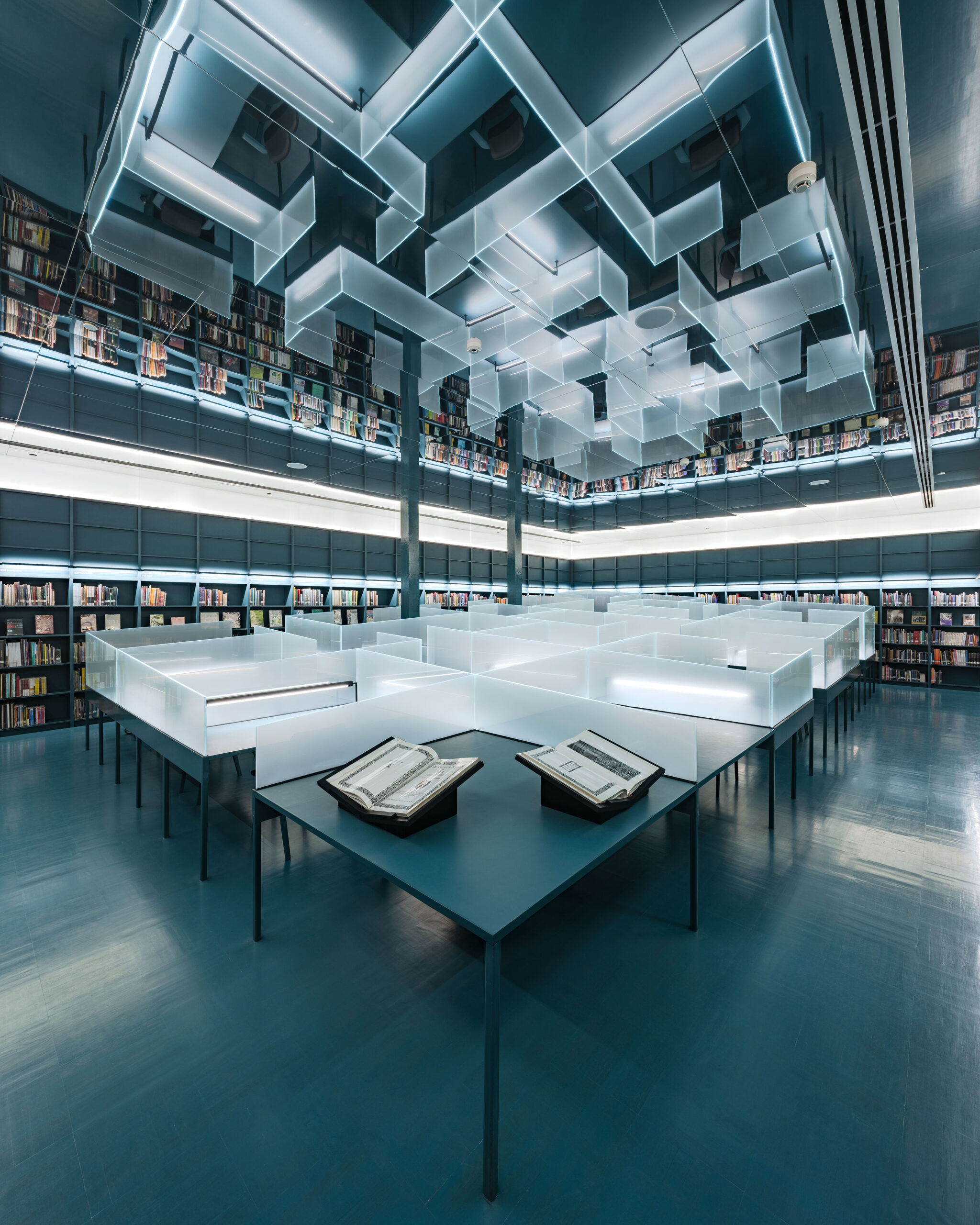
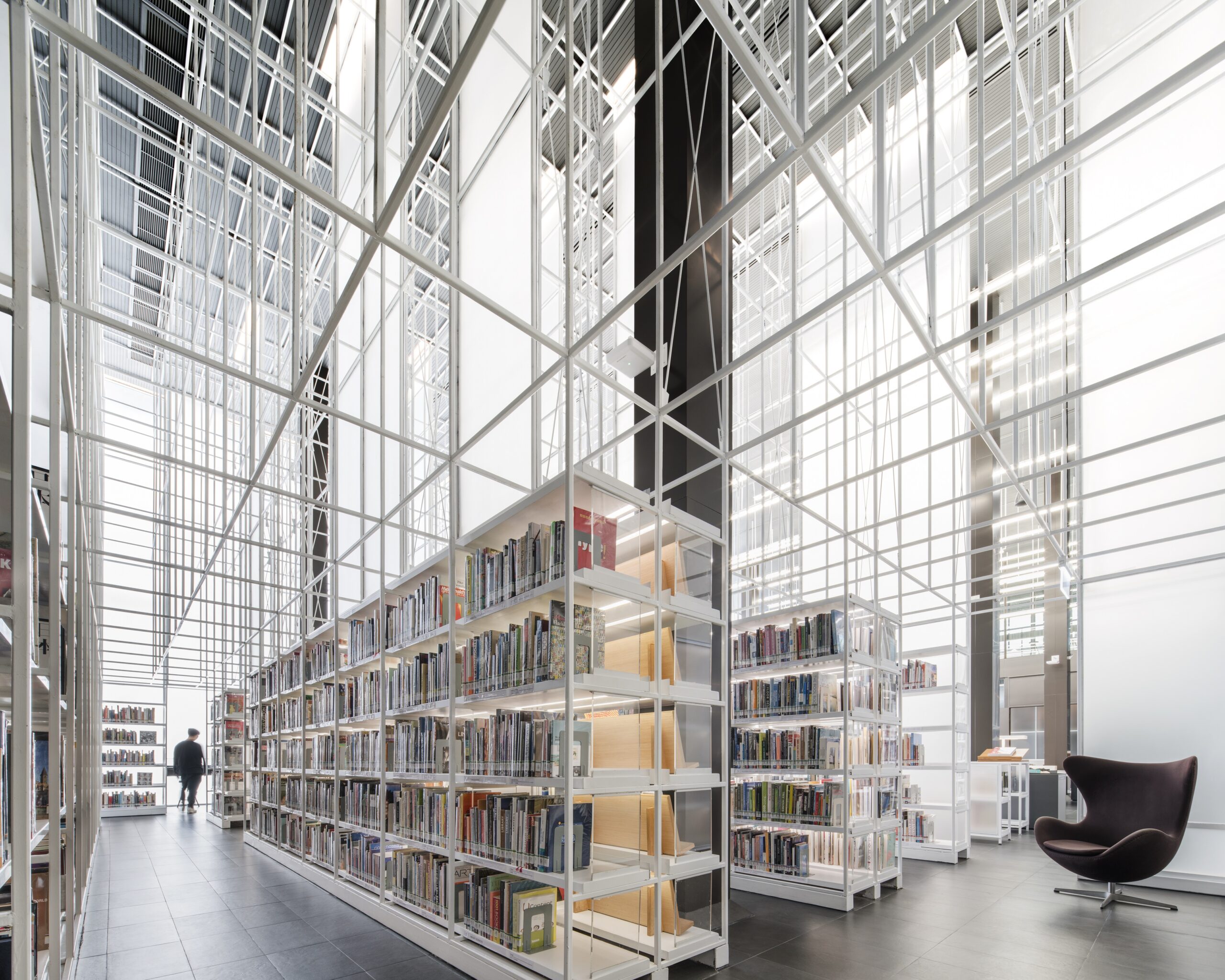
The Architecture Library at Chulalongkorn University explores how a contemporary library—particularly one within a school of architecture—can evolve in an age when knowledge and inspiration no longer exist solely in books. The project expands the meaning of the architecture library beyond a place for storing and reading books, transforming it into a “creative incubator” for architecture students. It serves as a space for the exchange of ideas and access to a wide range of intellectual resources.
Various programs are integrated into the library, including co-working areas, exhibition spaces, pin-up zones, and occasional lecture spaces, allowing the library to function as a platform for dialogue and interaction. In addition to books, the facility incorporates digital media, films, and exhibitions as complementary sources of knowledge and inspiration.
On the first level, a three-dimensional grid system envelops a co-working space, providing an open-ended experimental ground where students can create exhibitions, organize events, and present their work. The space encourages public flow, allowing passers-by to stop, observe, and participate. Although a great deal of information today is available online, books continue to provide a unique form of curated and in-depth knowledge. The library’s design therefore surrounds visitors physically with books, inviting them to engage directly with them.
The quiet reading zone features study carrels arranged in a labyrinth configuration to minimize disturbance from circulation areas. Above, a reflective ceiling reveals the luminous maze-like plan of the reading area. On the top floor, pixelated steps form a flexible reading landscape that can also function as an auditorium for lectures or film screenings, offering additional sources of inspiration. The library ultimately becomes a place where people gather to learn, think, and exchange ideas—a nurturing environment where creativity can flourish.
The project has received numerous international awards, including the Frame Awards in the Learning Space category (Frame Magazine, Netherlands), the Best of Best Design of the Year Award in Interior Design – Public Space from the Architecture MasterPrize (USA), the Blueprint Award for Best Interior Project (Work) from Blueprint Magazine (UK), the DEmark Awards in Interior Design from the Ministry of Commerce of Thailand, the ALA/IIDA Library Interior Design Award in the Academic Libraries under 30,000 sq. ft. category (USA), and the Best of Year Award in the Library category from Interior Design Magazine (USA).
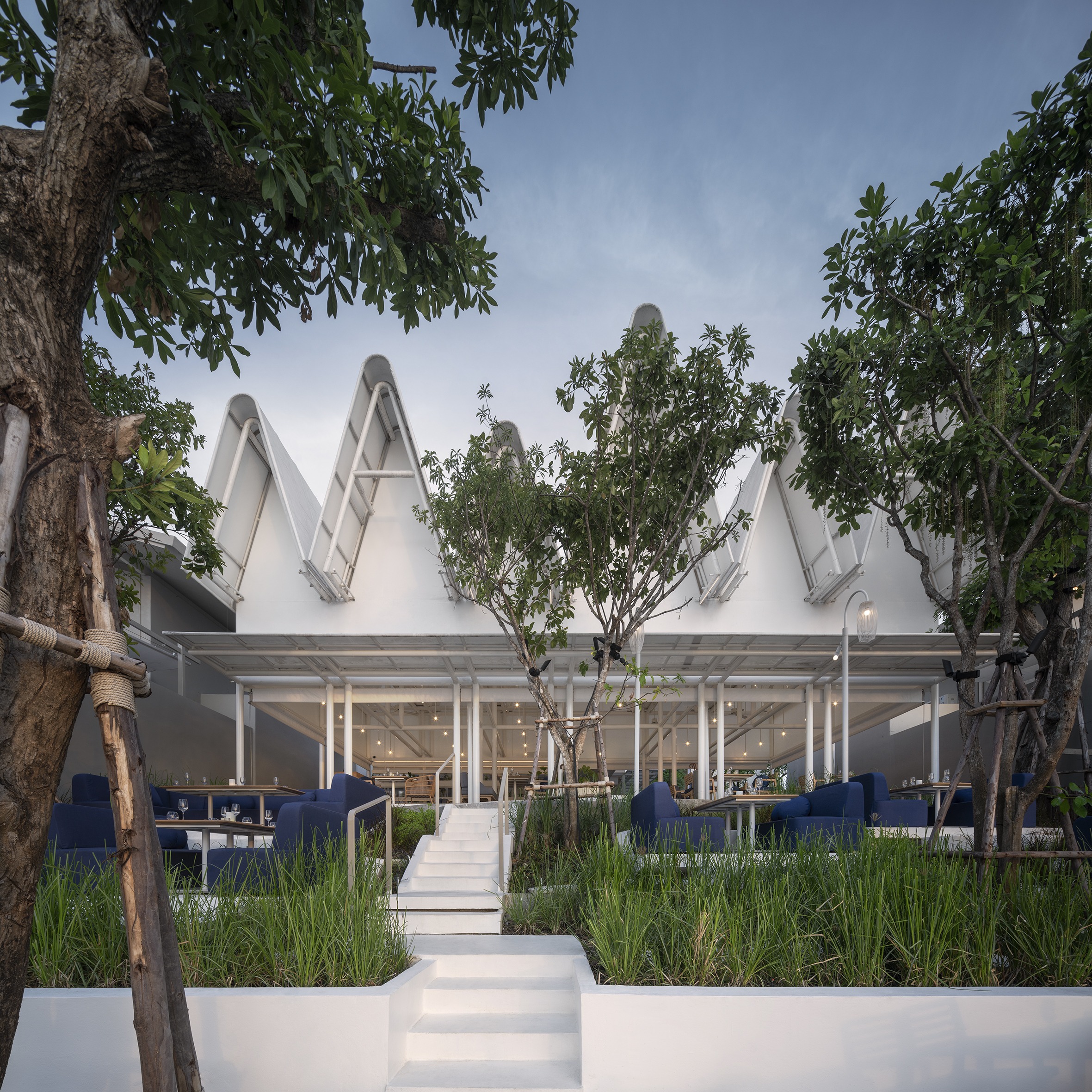
Another notable project by the studio is Sala Bang Pa-In Resort, located in the rural landscape of Ayutthaya, Thailand, bordered by a river on two sides. The design reinterprets the local landscape through contemporary architecture that connects visitors to the life and atmosphere of the river. The scale of the buildings respects the surrounding village houses, and the clustered rooflines correspond to those of the local settlement. The project uses local materials and craftsmanship while offering a contemporary spatial experience.
The architecture proposes a contemplative environment embedded within the fabric of local culture and landscape. All areas of the resort—from public spaces such as the restaurant, lobby, and outdoor multipurpose areas to guest rooms and villas—are designed to connect guests to the river through views, natural breezes, and the sensory qualities of the water landscape. The design prioritizes a multisensory relationship with place.
Sala Bang Pa-In Resort has received several awards, including the Architecture MasterPrize in the Hospitality Architecture category (USA), the DEmark Grand Prix from the Thai Ministry of Commerce, and the Prime Minister’s Export Awards in the Best Design category.
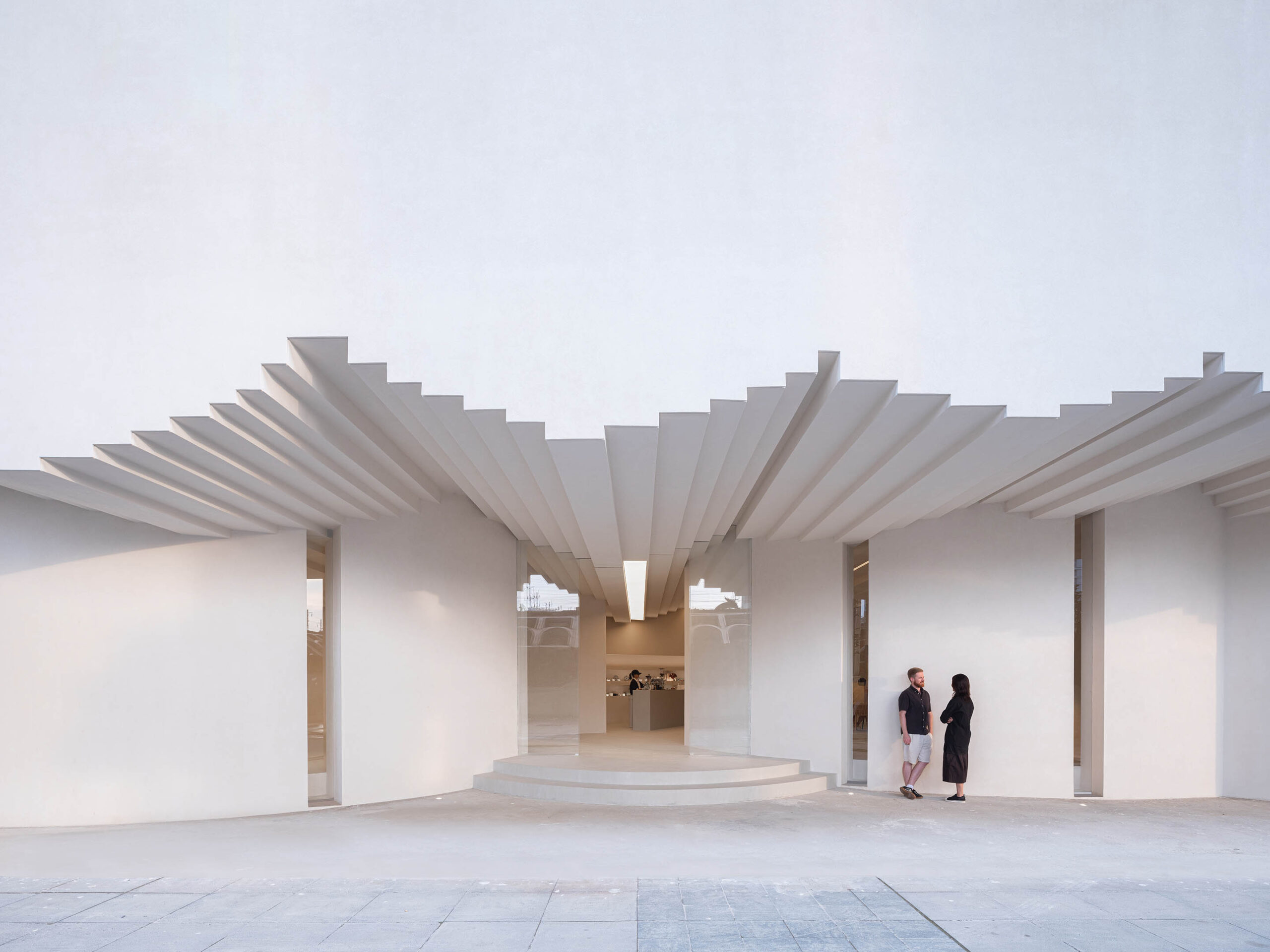
The Thailand Creative and Design Center (TCDC) is another major project that reflects the studio’s approach to architecture as a platform for creativity and knowledge exchange. TCDC is a government agency dedicated to promoting creative thinking and advancing Thailand’s creative economy. It provides a wide range of resources and services, including a design library, a material library, co-working spaces, makerspaces, exhibitions, and workshops.
The institution has been relocated to the historic Grand Postal Building in Bangkok. The design strategy creates a dialogue between the new interventions and the existing architecture while responding to TCDC’s mission as a national creative incubator. Rather than defining creativity through aesthetics alone, the space is designed to inspire interaction and exchange.
Open workspaces are distributed throughout the building to encourage informal conversations, while the main circulation route cuts through the section of the building, guiding visitors past different facilities and exposing them to the activities of others. Within the historic envelope, new architectural elements are inserted as contemporary objects that remain visually distinct from the original structure, revealing the architectural features of the 1930s building.
The new materials—light, translucent, and softly glowing—contrast with the heavy historical shell, creating a dialogue between past and present. A translucent architectural system wraps and flows through the building, containing books, magazines, material samples, exhibitions, and announcements. In doing so, it embodies the essence of TCDC: a continuous flow of knowledge and inspiration throughout the creative spaces.
The project has received several international awards, including the Architizer A+ Awards Jury Winner in the Government & Municipal Buildings category (USA), both Jury Winner and Popular Choice Winner in the Architecture + Furniture category at the Architizer A+ Awards, the Blueprint Award for Best Interior Project (Work) from Blueprint Magazine (UK), the Best of Year Award in the Library category from Interior Design Magazine (USA), and the FX International Interior Design Award in the Workspace Environment (Large) category from FX Magazine (UK).
Another emerging voice in Thailand’s architectural and urban design landscape is Suttahathai Niyomwas (Jan), an architect and urban designer whose work focuses on community-centric design, urban data, and placemaking. Her practice emphasizes translating local voices and community knowledge into spatial strategies and urban revitalization plans.
A Fulbright Scholar, Niyomwas holds a Master’s degree in Advanced Architecture from Cornell University and is a licensed architect in Thailand. She has practiced internationally, including in New York City, where she contributed to architectural and urban design projects before returning to Thailand.
She is a co-founder of City Connext, where she leads projects that integrate architecture, adaptive reuse, urban design, and civic engagement. Her work spans community-driven design initiatives, public space reimagination, urban vision planning, and co-created learning tools that empower young people to actively participate in shaping their cities.