Belém, Brazil — 10 to 21 November 2025
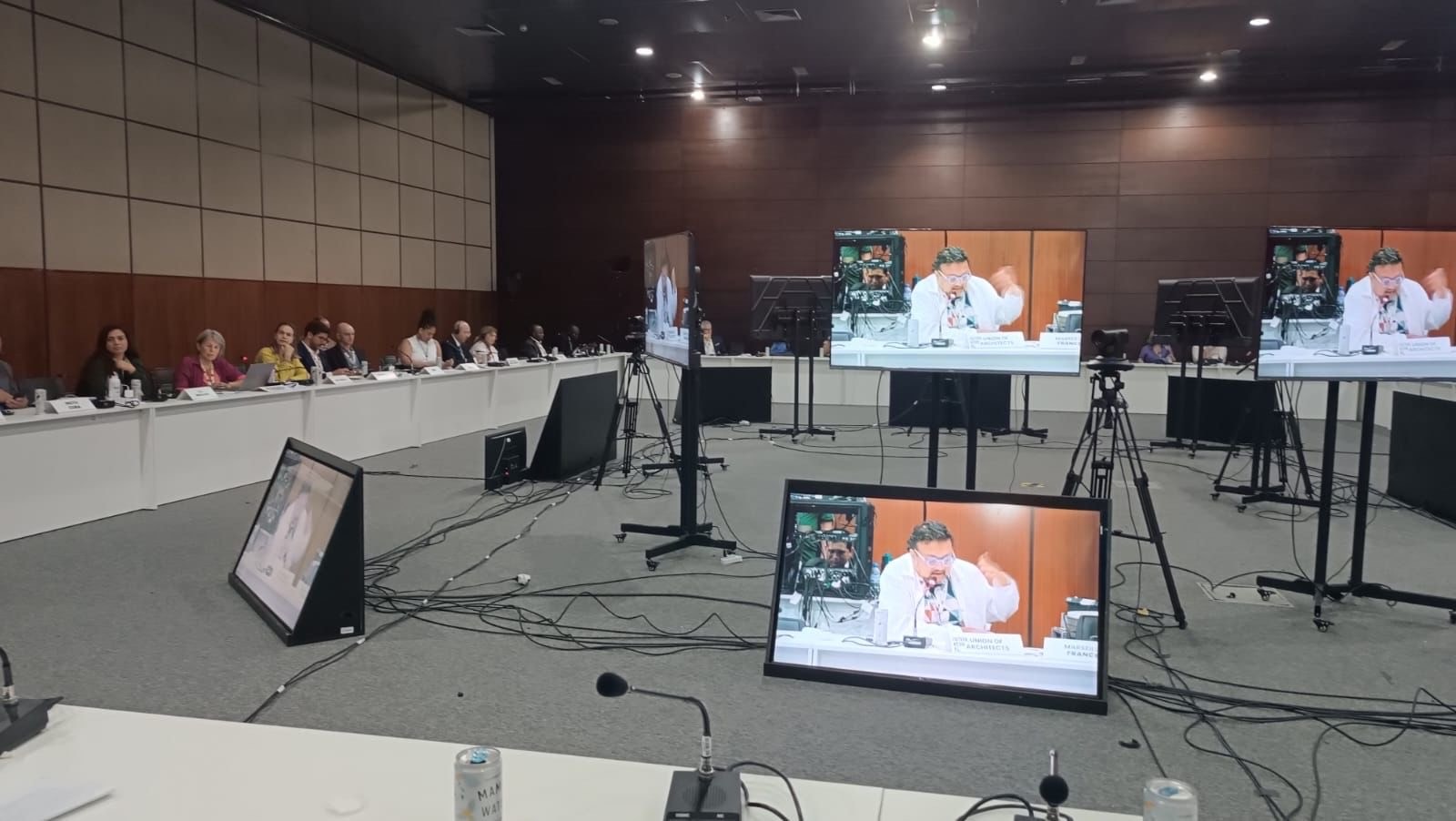
The International Union of Architects (UIA) played an active and visible role at COP30, held in Belém, Brazil, in the heart of the Amazon—a region vital to global climate stability. Throughout two weeks of dialogues, roundtables, and strategic collaborations, the UIA emphasised the essential contribution of architecture, urban planning, and design to climate justice, public health, cultural resilience, and sustainable development.
UIA–WHO Collaboration: Architecture for Climate and Health
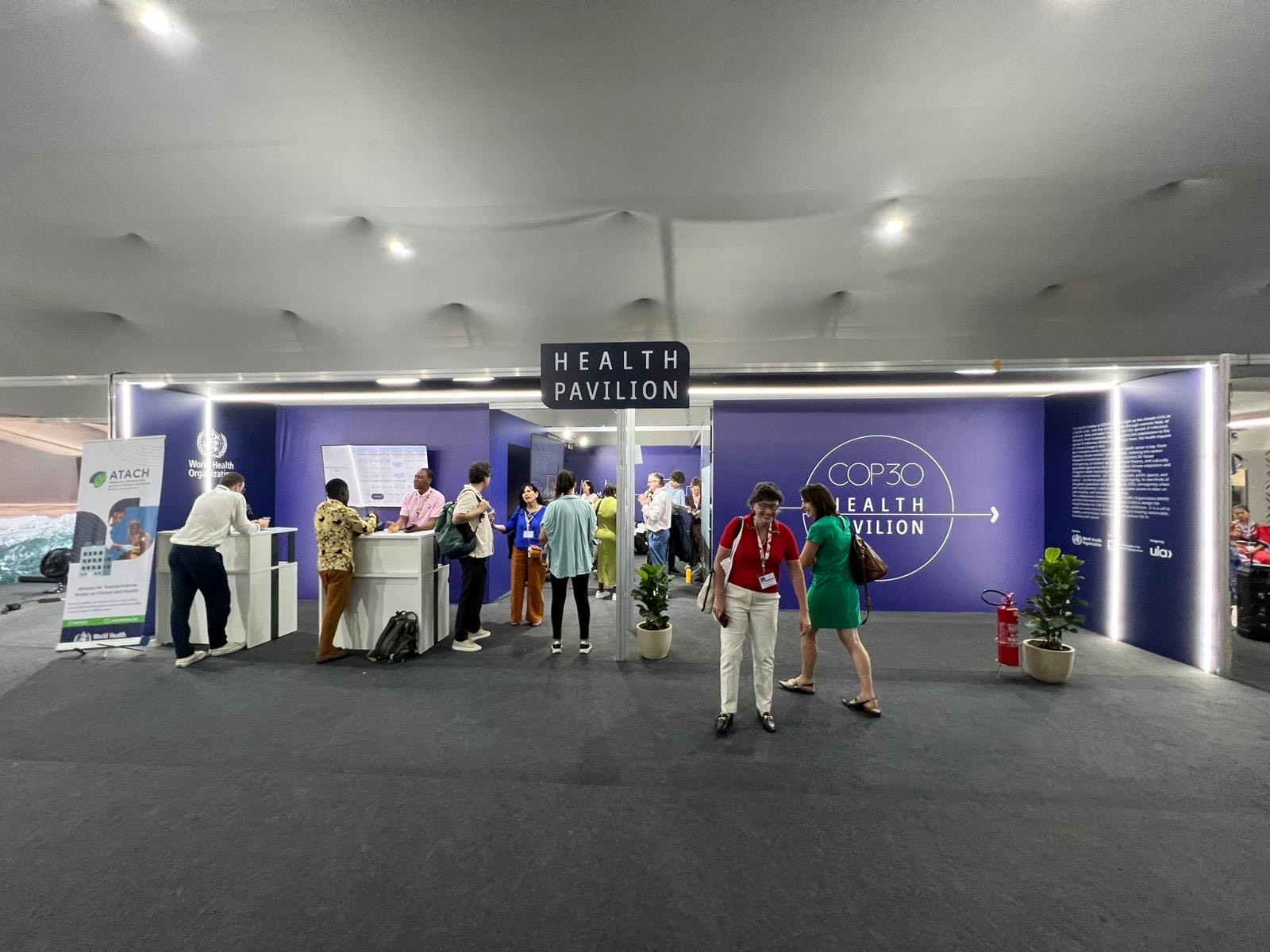
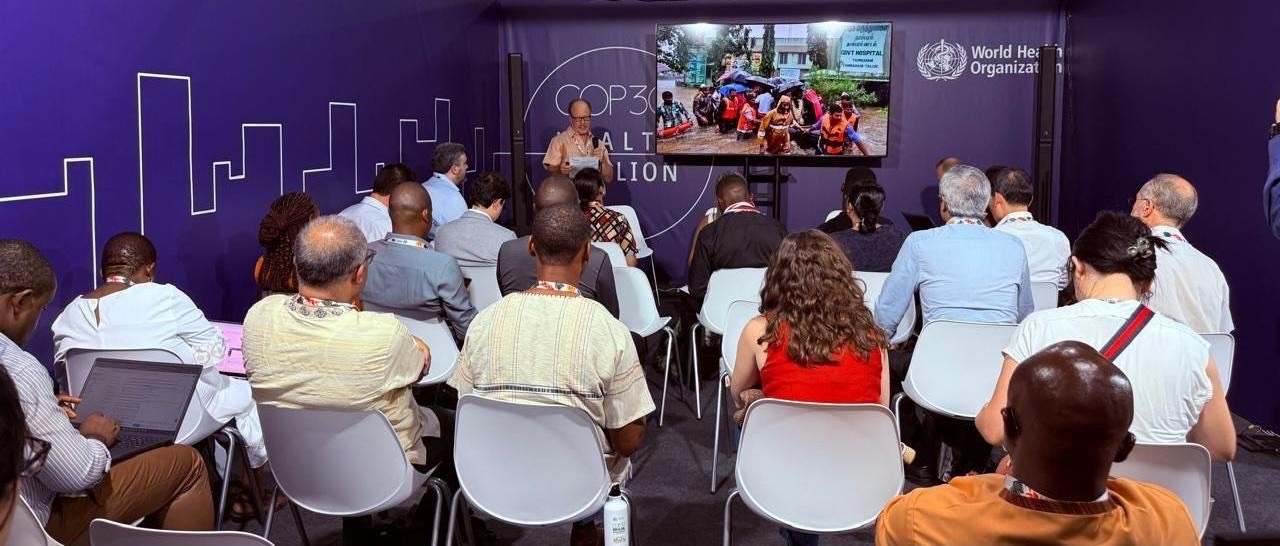
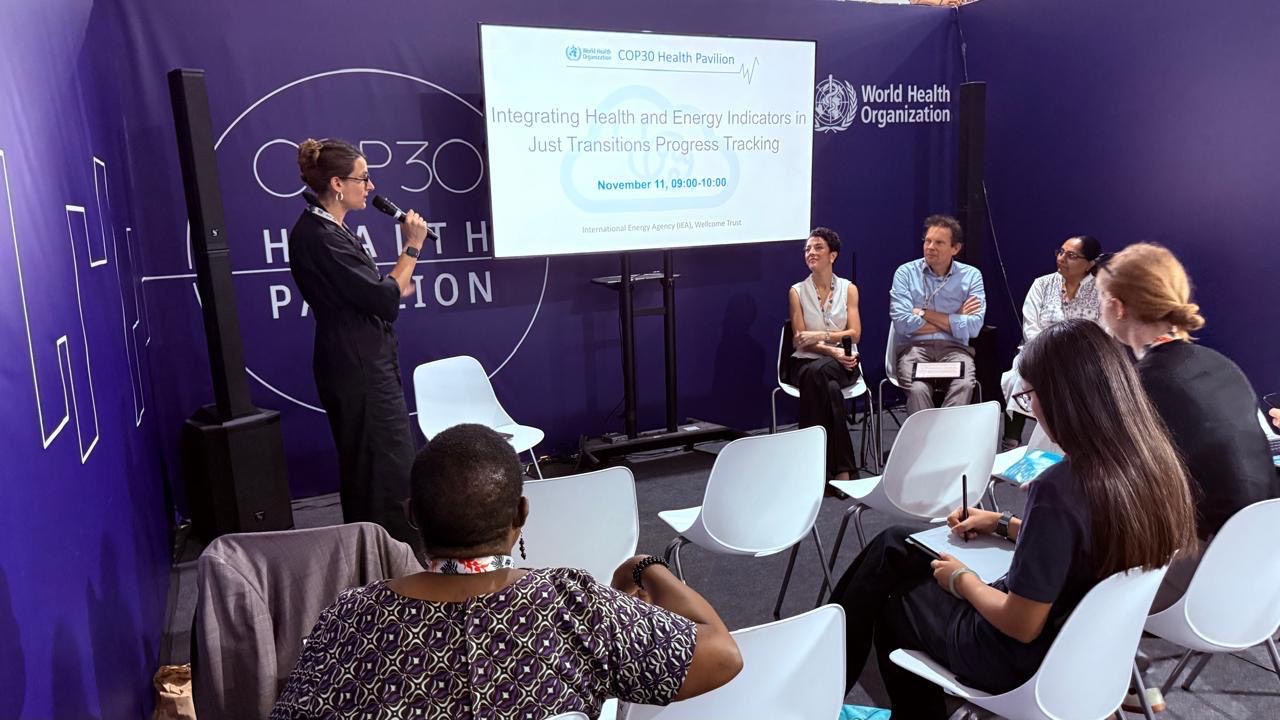
As a Non-State Actor in Official Relations with the World Health Organization (WHO) and under the 2025–2027 Collaboration Plan, the UIA contributed to the design and programming of the WHO Health Pavilion, conceived as a bridge between science, design, health and policy.
The Pavilion delivered a clear message: the climate crisis is a health crisis. It showcased how architecture, spatial planning and territorial governance can advance health equity, climate resilience, low-carbon development, and the creation of inclusive, safe and healthy cities.
First Week Highlights
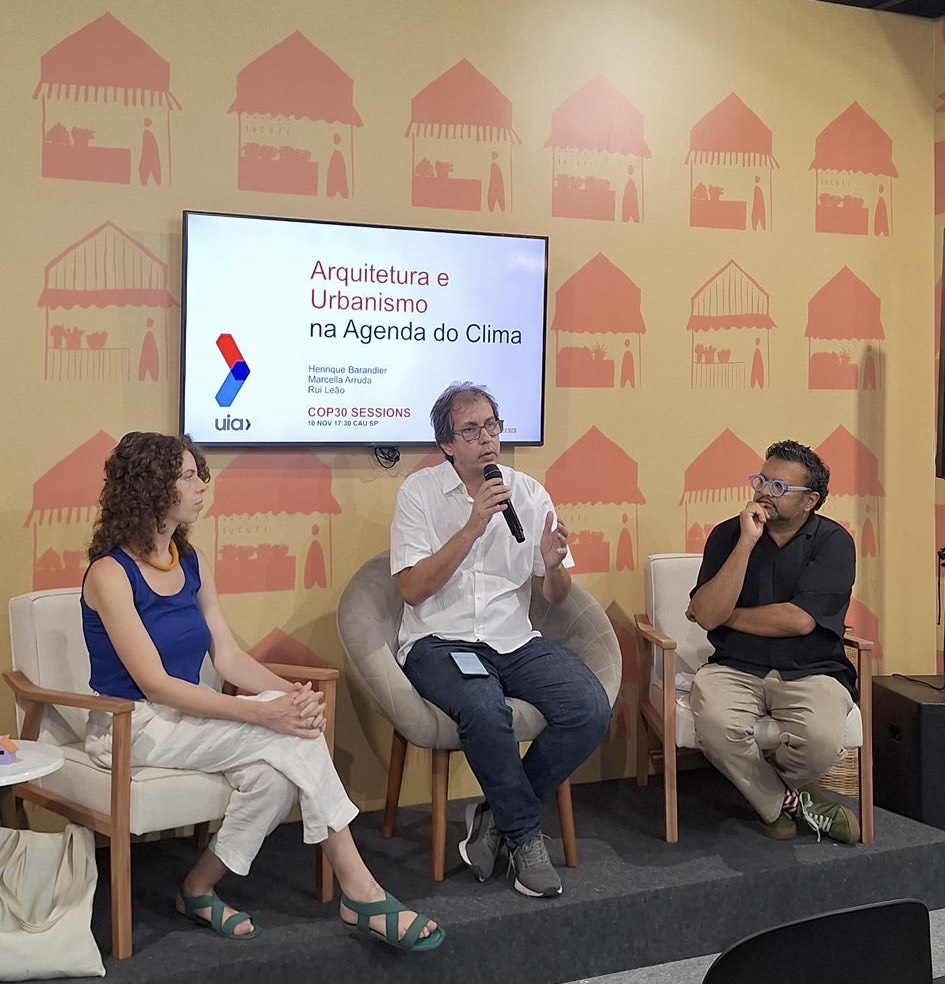
Architecture and Urbanism in the Climate Agenda
At the CAU/SP Pavilion, the UIA joined the Institute of Architects of Brazil (IAB–Rio de Janeiro) in a session on architecture’s role in climate action. Speakers stressed that climate impacts disproportionately affect vulnerable communities and that addressing climate change requires addressing deep social inequalities.
Discussions drew from the work of the IAB Urban Policy Commission and the upcoming 2025 São Paulo Architecture Biennial, alongside UIA global initiatives promoting low-carbon and regenerative approaches.
The UIA also participated in the launch of the 5th edition of the “IAB Guide to the 2030 Agenda”, a joint IAB–UIA initiative presenting architectural and urban projects aligned with the UN Sustainable Development Goals (SDGs).
High-Level Ministerial Roundtable: Housing and Climate Justice
On 11 November, during a UN-Habitat roundtable in the Blue Zone, UIA Secretary-General Rui Leão delivered concluding remarks on the link between housing and climate action. Adequate housing and access to basic services were reaffirmed as cornerstones of climate justice and essential pathways toward a just urban transition.
Design as a Driver for Climate Action
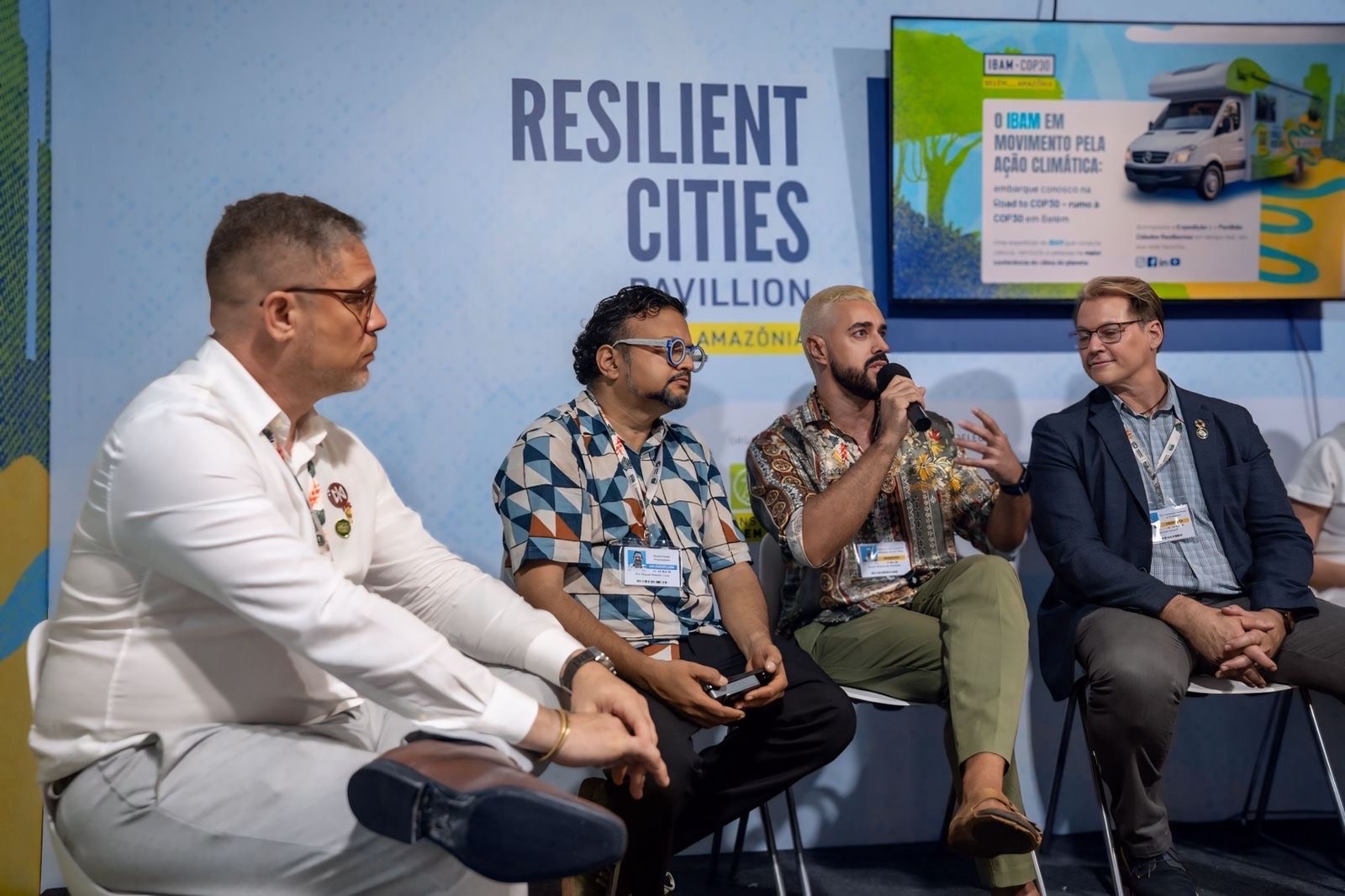
At the Resilient Cities Pavilion, the UIA moderated a session co-organised with AIA, ICOMOS and the Climate Heritage Network, reframing design as a systemic tool capable of reducing emissions, improving public health, fostering innovation, and creating inclusive public spaces.
Speakers underscored the need to break down siloed approaches and embed heritage, culture and community knowledge into climate strategies.
Cultural Heritage and Sustainable Construction
On 12 November, the UIA attended events hosted by the World Economic Forum, the Davos Baukultur Alliance, and Saint-Gobain, focusing on the power of cultural heritage and the importance of sustainable construction methods in tropical and Amazonian regions.
Resilient Urban Infrastructure
On 13 November, the UIA participated in a roundtable with the Brazilian Ministry of Cities and UNEP addressing the challenges cities—particularly in the Global South—face when implementing adaptation measures in consolidated urban areas.
Discussions emphasised the urgent need for technical capacity, access to climate finance, and high-quality, climate-aligned infrastructure projects.
Cultural Heritage-Based Climate Action
The UIA co-organised a major session with WMF, ICOMOS and CHN on the role of cultural heritage in climate resilience. Presenters showcased global cases where traditional knowledge and building reuse strategies support low-carbon adaptation and strengthen community cohesion.
ATACH Day – Healthy Climate Action Across Sectors
At the WHO Health Pavilion, the UIA contributed to ATACH Day, where Rui Leão spoke on the need to integrate health co-benefits into climate policies and to recognise the built environment as a determinant of public health and long-term resilience.
Second Week
Social Engagement and Green Architecture
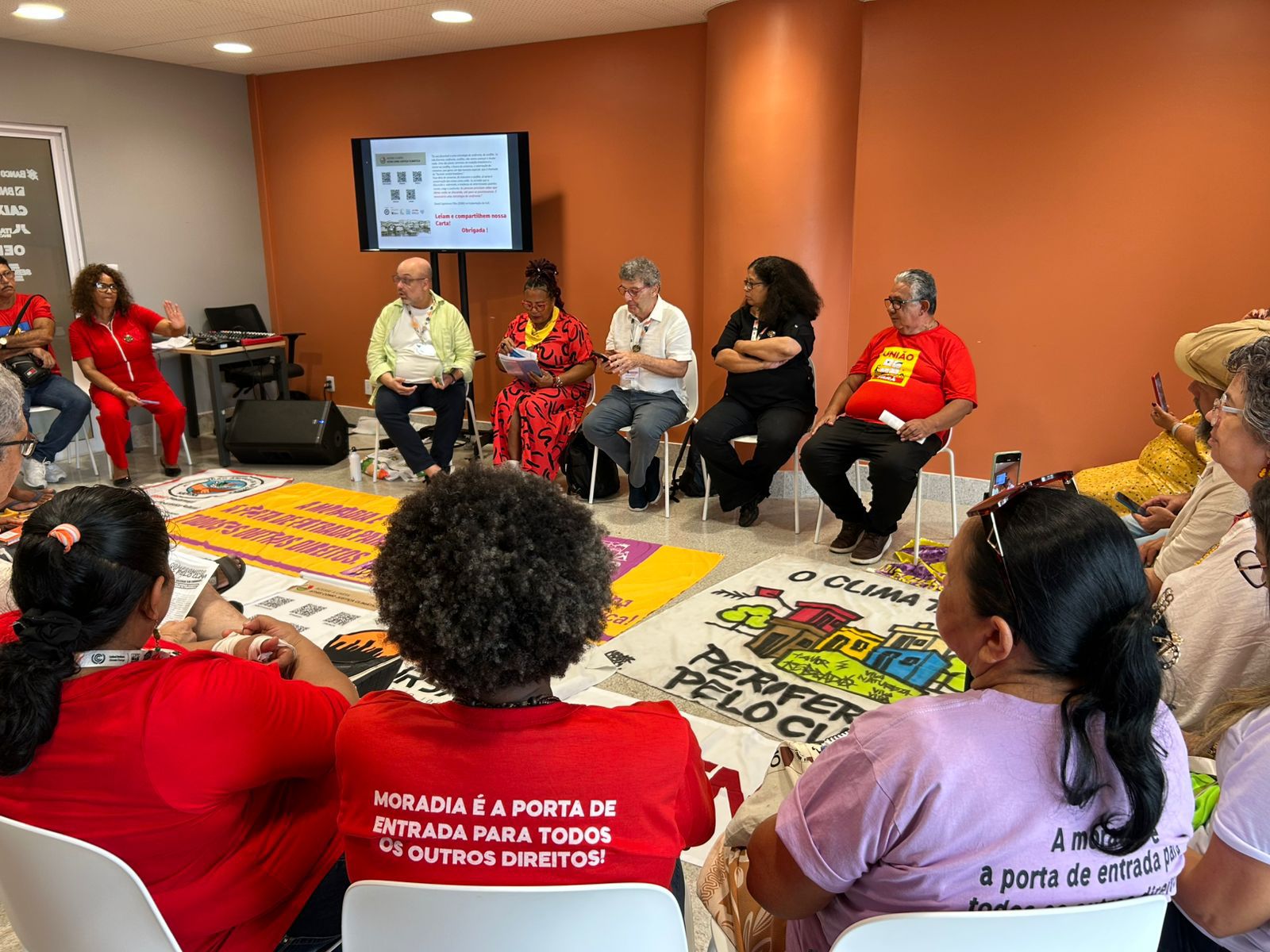
At the beginning of COP30’s second week, the UIA engaged deeply with the social dimension of housing, participating in events hosted by Brazilian social movements such as Architects for Housing and Struggle for Housing.
The UIA reaffirmed that architecture and urbanism are not only instruments for providing shelter, but also fundamental tools for climate justice, community dignity, and inclusive development. These exchanges highlighted how the fight for decent housing is inseparable from global climate commitments, reminding us that sustainable and equitable urbanisation is essential for achieving both the 2030 Agenda and the Paris Agreement.
To conclude its participation at COP30, the UIA co-organised a final panel at the Resilient Cities Pavilion with ICOMOS, Architecture 2030 (A2030) and the Climate Heritage Network (CHN).
The debate, focused on “The Role of Green Architecture in Combating Climate Change,” synthesised the discussions of both weeks and presented practical cases and design strategies that integrate energy efficiency, low-carbon innovation, nature-based solutions, and human well-being.
Conclusion: Architecture at the Centre of Climate Action
Across COP30, the UIA reaffirmed the essential contribution of architecture, design and urban planning to global climate action. Through high-level dialogues, institutional partnerships and technical discussions, the UIA highlighted that: Housing is climate justice, design is a strategic tool for resilience, architecture is central to health-promoting environments and inclusive, equitable cities are indispensable for a just transition.
The UIA remains committed to advancing interdisciplinary collaboration and global advocacy for a sustainable, healthy and resilient built environment—supporting architects worldwide as key actors in addressing the climate emergency.
UIA Attendance: Manaus, a fluvial city (November 15th – Casa BID – The IDB’s pavilion at the Green Zone + Amazon Forever Station at Goeldi Museum)
A coalition of institutions – Massachusetts Institute of Technology (MIT), Federal University of Amazon (UFAM), University of São Paulo (USP), and the InterAmerican Development Bank (IDB) – has come together to launch a design studio in the city of Manaus, focusing on a topic often overlooked: urban life and development on the riverfronts of the Amazon. In regions where cities are frequently forgotten, this initiative seeks to make them visible – highlighting the unique challenges they face due to their geographic location and the surrounding ecosystem.
Keynote Speakers: Tatiana Gallego (Head of the Housing and Urban Development Division – IDB); Marcos Cereto (Professor – Federal University of Amazonas); Angelo Bucci (Profesor – MIT School of Architecture and Planning)
Moderator: Gabriella Y. Carolini (Associate Professor – MIT School of Architecture and Planning)
Panelists: Juliana Cambeiro (Student – Federal University of Amazonas); Ana Julia Bettio Pereira (Student and Researcher – School of Architecture and Urbanism of the University of Sao Paulo); Juliana Cambeiro (Student – Federal University of Amazonas); Jacob Payne (Student – MIT School of Architecture and Planning); Katherine Polkinghorne (Student – MIT School of Architecture and Planning)
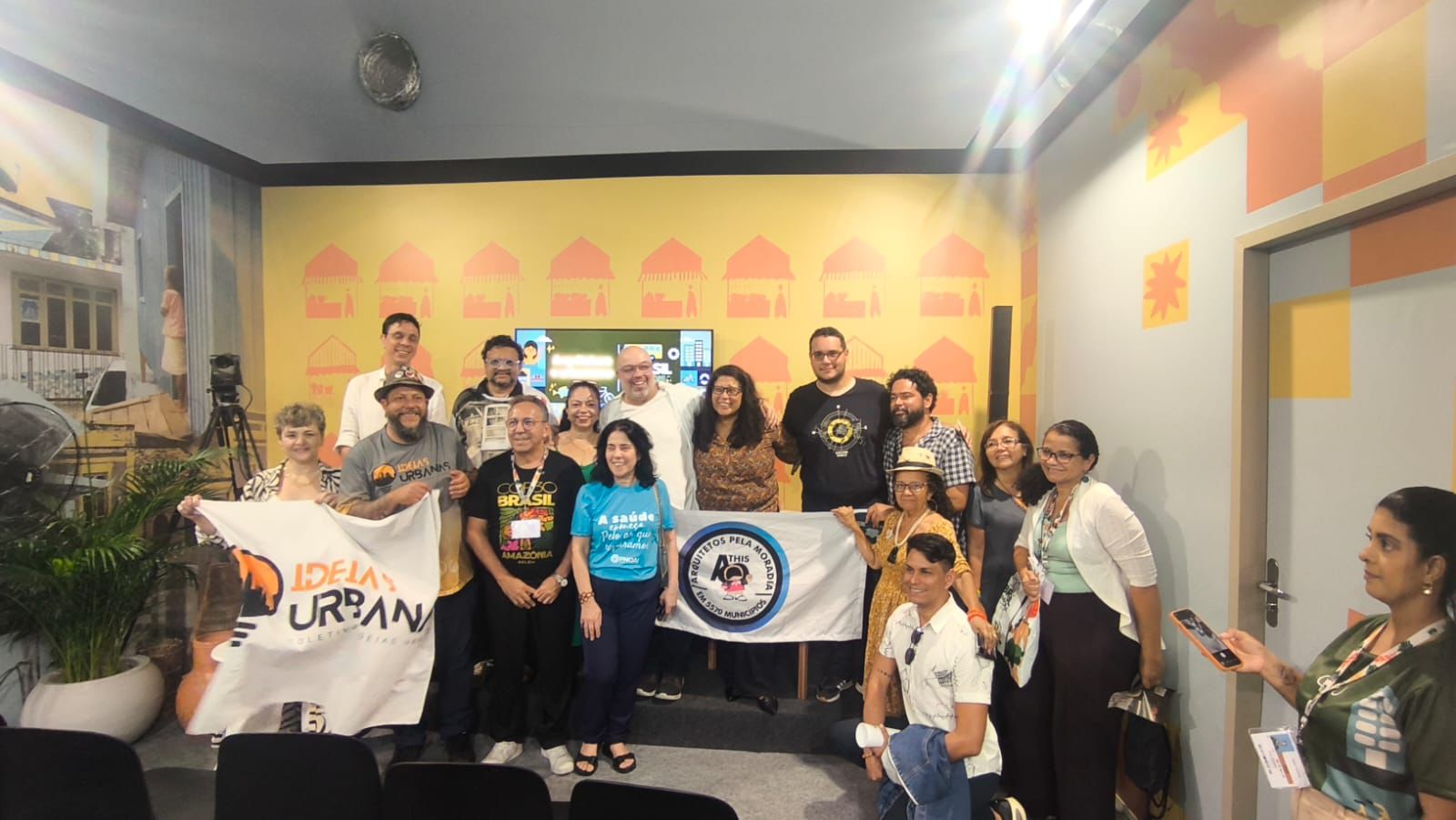
UIA Participation: Participatory Urbanism (November 17th – Resilient Cities Pavillion)
The debate “Participatory Urbanism,” organized by Architects for Housing and the Ministry of Cities of Brazil addressed the role of participatory urbanism in building more just and inclusive cities.
Keynote Speakers: Claudia Pires (Architects for Housing); Filemon Tiago (Urban Ideas); Cid Blanco (UIA)
UIA Attendance: Planning, Networks, and Climate: global connections to accelerate climate action in cities (November 18th – Resilient Cities Pavillion)
The panel “Planning, Networks, and Climate: global connections to accelerate climate action in cities”, organized by the Brazilian Network of Planning Institutes (InREDE), brings together the ISOCARP (International Society of City and Regional Planners) group, an international network of urbanists and planners.
UIA Attendance: Capacity-building Hub: Building capacity through policy for culture-based climate action (November 18th – Special event room – Tapajos, Area C)
The session organized by The Convergence and Entertainment + Culture Pavilion explored how cultural heritage and the creative sector can be systematically integrated into climate policies and action plans. Speakers discussed opportunities for scaling and alignment with frameworks such as the GST, GGA, NAPs, and NDCs and inclusion of indigenous knowledge. The dialogue addressed capacity gaps, collaboration models, and next steps to strengthen culture-based climate action across all levels.
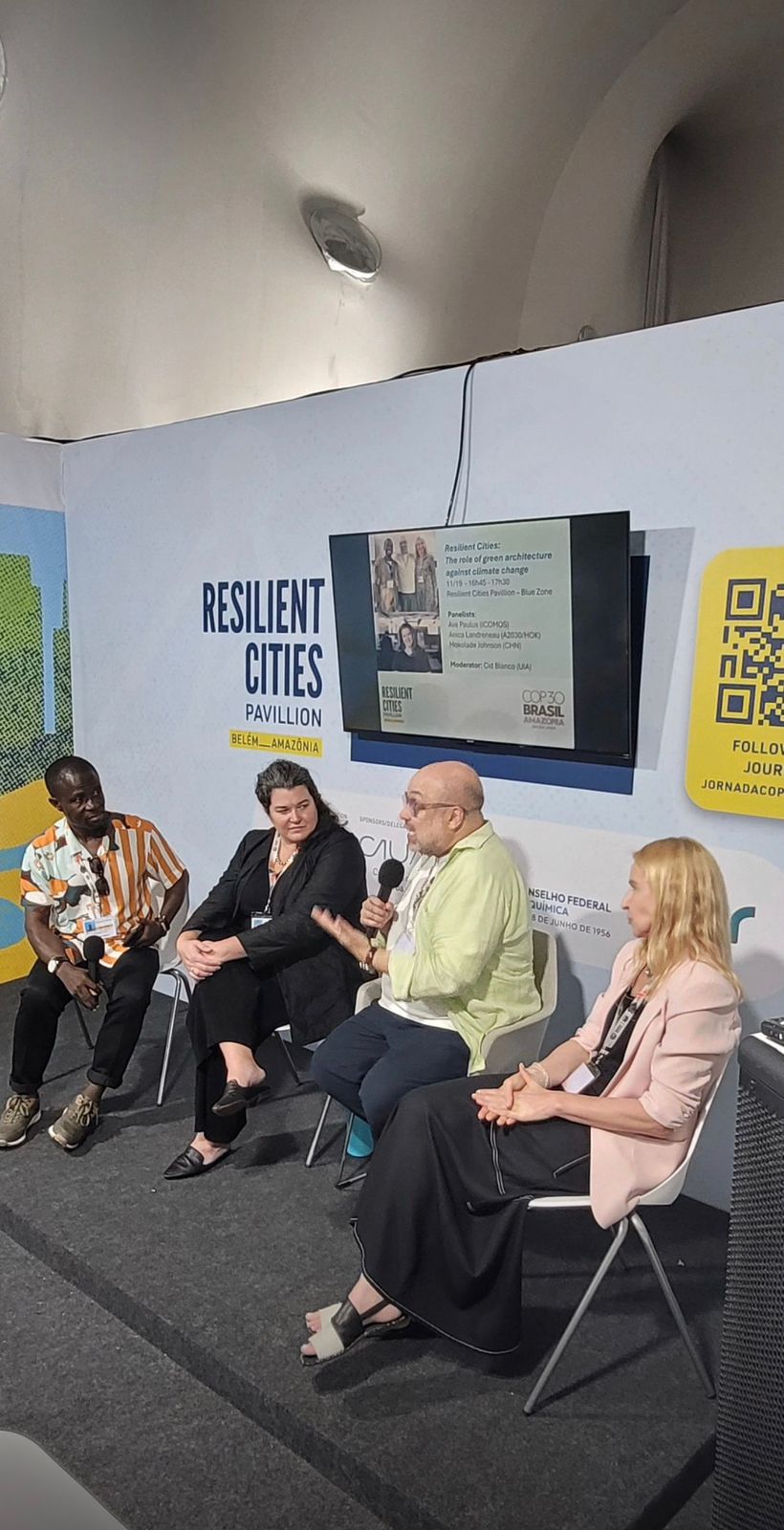
UIA Participation: Resilient Cities: The role of green architecture against climate change (November 19th – Resilient Cities Pavillion)
Organizers: International Union of Architects (UIA), International Council on Monuments and Sites (ICOMOS), Architecture 2030 (A2030) and Climate Heritage Network (CHN)
Panelists Ave Paulus (ICOMOS); Anica Landreneau (A2030); and Mokolade Johnson (CHN)
Moderator: Cid Blanco (UIA)
This roundtable moves beyond viewing green architecture as simply energy-efficient buildings, positioning it as a critical, multi-functional tool for both mitigating climate change and adapting to its unavoidable impacts. Green architecture—encompassing everything from green roofs and walls to biophilic design and passive cooling—delivers a powerful synergy of benefits. It directly sequesters carbon, reduces the energy needed for heating and cooling (mitigation), and simultaneously manages stormwater, reduces the urban heat island effect, and enhances biodiversity (adaptation). By integrating nature into the built environment, we can transform buildings from passive structures into active, resilient systems that protect inhabitants and reduce a city’s overall climate vulnerability.
UIA Attendance: Oil, Climate, Mangroves, and Tidal Communities: What is at Stake? (November 19th – Casa da Cidade)
The main focus of the discussion organized by the Mapinguari Institute, the Coordination of Indigenous Peoples and Organizations of Amapá and Northern Pará (Apoianp), the Network of Beach Women of the Cururupu Extractive Reserve, and the Arayara Institute was the threat that oil exploration poses to fragile mangrove ecosystems and to the livelihoods of coastal communities. Participants shared reports and analyses on the impacts that are already being felt and the imminent danger of large-scale environmental disasters.
UIA Participation: The role of housing policy in adapting cities from a climate justice perspective (November 19th – Creative Economy Building)
The event was promoted by the Faculty of Urbanism of the University of São Paulo and was attended by Nabil Bonduki (FAU-USP), Cláudia Pires (Arquitetos pela Moradia), Graça Xavier (UNMP), Samia Sulaiman (SNP-MCid), and Cid Blanco (UIA, former SNH-MCid).
The panel discussed the relationship between the housing problem and the climate emergency, with the aim of identifying alternatives for adapting cities to cope with extreme events, taking into account that climate change affects the poor most intensely, who, due to a lack of housing solutions, live in areas unsuitable for urbanization. The panel focused on presenting proposals for housing policies.