2026 Laureate – The Auguste Perret Prize for Technology in Architecture
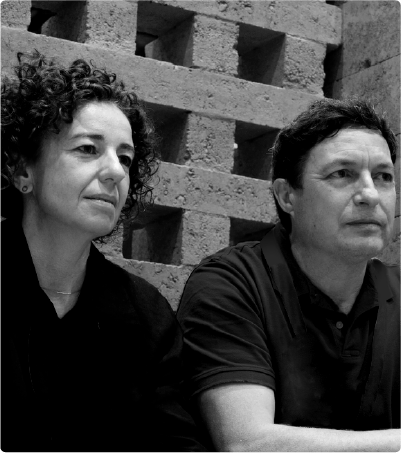
Fetdeterra (Spain) is an eco-innovation initiative founded by architect Maite Sainz de la Maza Benet and engineering geologist Macari de Torres Mestres.








Their work focuses on the research and development of industrialised building systems using raw earth, with particular attention to sustainability, material efficiency, and environmental impact.


Through applied research and product development, they have developed modular and scalable construction systems that integrate structural, thermal, and finishing components based on natural materials.
Founded in 2011, their practice combines expertise in architecture, geotechnics, and material science, and operates across design, construction, and technological innovation.
Across their work, they have contributed to the advancement of low-carbon construction methods, bridging vernacular building techniques with contemporary industrial processes.
Their work has received awards from institutions including the Spanish Biennial of Architecture and Urbanism, the Terra Ibérica Architecture Award, and Construmat, and has been presented at international exhibitions such as the Venice Architecture Biennale.
Jury’s remarks
“Through the development of a complete modular system of low-carbon, low environmental footprint fabrication, Fetdeterra demonstrates how technological innovation can be achieved without compromising the poetics of making.”
Fetdeterra is recognised for work that exemplifies the values of the Auguste Perret Prize for Technology in Architecture.
Their work offers a distinctive interpretation of architectural beauty through sustainability, exemplifying a contemporary synthesis of technology and art. By integrating technical precision with material intelligence, Fetdeterra advances an approach to construction that is environmentally responsible, culturally grounded, and architecturally meaningful.
Their practice demonstrates how innovation in building systems can simultaneously reduce impact and enrich architectural expression.